Sekhem Pendant

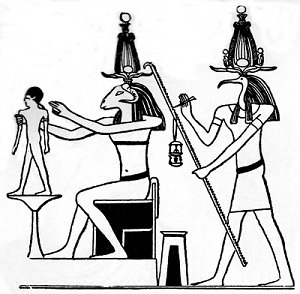
I just got my new pendant from my friend, Aidan Wachter, who does some amazing pendants in silver. He also does custom work This is a one that I helped design. I received it just before Yule. To put it mildly, I absolutely love it!

He will be offering this particular piece in the future on his website which can be found at.

http://tveirhrafnar.com/

Aidan’s work is top notch, the highest quality silver and he has very reasonable prices along with just being a generally very cool person. Check out his work!

EDIT: I have been indirectly coaxed into trying my hand at the 30 Day Talisman Challenge as proposed by author and podcast extraordinare, Andrieh Vitimus. My spiritual sister, Ashtoreth Eldritch became involved and it looked like a great way to start out the New Year. And so now, I am under the wire in telling Andrieh, “Hey! I want to be included!” So here I am.

The next post in this blog will likely be the ritual that I have been writing surrounding the dedication of this particular amulet. I have also been toying with the idea of video blog that I will upload to YouTube as well.

1 Comment

Filed under Uncategorized

The Kemet is Cool Project

pendant In my travels, being fresh from bed and my 30 second commute to my office, I was thinking that the prevailing theme here on my blog, on Tumblr and on my Facebook page is all about Kemet. All in all, I find that it doesn’t really matter what anyone’s individual opinion on Kemet is. For all of us, its the art, the religion, the culture and the history are truly what draw us. What matters to the most people is just that we are drawn to it – the why sometimes is rather intangible. There is a simple, yet sophisticated beauty that is timeless and it is that which speaks to the deepest part of our individual psyches.

So, that focus is going to be reflected here on my blog at fannyfae.com and on my Facebook page (as usual). It seems to be what people most resonate to, and it gives me a chance to show others with the same love of Kemet or Ancient Egypt things they may not have heard of, aritists they may not be aware of that do fantastic work.

I look at this as my effort to get away from the infighting and the petty squabbles that seem to plague so many groups. I don’t care if the resource is Kemetic Orthodox, Reconstructionist, Afrocentrist, mainstream Egyptology or what have you. One truth remains: We each love the Two Lands for our own reasons, and no one else can dictate those reasons to us except by the callings of the deepest place in our kas. This project is specifically about that and that alone with no other agenda.

Ankh, udja seneb! (Life, prosperity and health!)

Fanny Fae (aka NiankhSekhmet)

1 Comment

Filed under kemetic, pagan

Who is Fit to Teach?

On the Potter's Wheel Let me state at the outset that this particular blog entry is not really going to discuss the legitimacy of folks who teach in our elementary, secondary or university and college level schools. I count many professional teachers and professors as my friends and I truly admire all of the hard work that they do and the patience they must have in order to do it. I am grateful in ways I cannot even begin to recount those teachers to whom I am indebted for my son’s education and my own. For that I say a heartfelt ‘Thank You’. This article, however, is to discuss those who set themselves up as instructors of those who are seeking a sort of spiritual education, both in formal churches, temples, circles, covens and even those who write how-to books for readers who are seeking.

A couple of months ago, Sarah Lawless discussed the topic of Evaluating Our Teachers. While her subject was aimed at Witches and Pagans, the topic is equally relevant to Kemetics as well.

Whenever there is any sort of scandal about religious leaders falling from grace, especially in those faiths that are not Christian, Jewish or Islamic, the scandal seems just that much larger. Rather than simply being a cautionary tale, they serve the mainstream faiths as to why non-traditional faiths are so dangerous.

Certainly, given the more lax standards that most of those who are not of the Big Three (J, C or I) Paganism and it’s cousins can tend to attract a certain level of persons that are just best not allowed such power or influence under any circumstance. Everyone wants to be special. Everyone wants to feel that what they say and do is worthy of attention or the words that they say deserve to be listened to.

Everyone, however, is not suited to priesthood or to teach others in any sort of spiritual sense. Through the lens of being a functional adult able to be both in the realm of the spiritual and the realm of the everyday, ordinary or mundane, they cannot even be entrusted for the well-being and adequate management of their own lives. How then, could they even imagine that they are in any way trustworthy enough to be entrusted enough to handle the spiritual and emotional well-being of others? The momentary highs of arm-wavey goodness in front of a small captive audience is an enticing draw of being some sort of spiritual rock star for some. These folks are mainly attracted to the idea of being such a center of attention or the ego stroking buzz and everyone else around them are merely bit players while they star in their play. These folks don’t realize that the ritual or an organization’s very existence is not even about them at all. It’s about service to one’s community and to the gods above all else.

I have often railed about the sloppy scholarship among Pagans and Heathens that passes for being adequate enough to suit the masses. It seems anyone with an internet connection on their computer or phone can read a Wiki article and become and instant expert. Too few among us have time time, the money, or the tenacity to want to seek out rare and hard to find texts in order to find out as much as possible about their gods. We have precious few scholars and degreed professionals within Kemeticism who actually do practice the faith and who have not either been intimidated into denying that ‘they believe in any of this stuff’, or are patient enough or well suited to the task of helping laypersons sort through the vast amounts of extant texts, books and other materials in order to get to the real spiritual foundations that make up our practices.

The unfortunate thing that sometimes arises is that too many of us have witnessed those who take on a veneer of haughtiness and arrogance that only seems to come with advanced degrees. Looking down your nose at those who are truly interested in doing whatever it takes is not something that good teachers do. Good teachers don’t need to, and usually do not badmouth other teachers that a student may have had previously, even if the previous teacher held views that were contrary to their own. A good teacher does not attempt to be all things to all people. If the area of expertise is something outside the scope of their own, a good teacher will send a student to another teacher who is better suited for the task. A recent kerfuffle over on the blog of a very visible Canaanite polytheist is a clear example of this.

This particular blogger, because historically, the people of ancient Canaan and the people of ancient Kemet were in the same region and had interactions, they have a nasty habit of including Kemetics in their posts as to how Kemetic practioners – priests in particular – should be doing their practices. According to the Canaanite polytheist blogger, to consume offerings after they are offered is essentially stealing from God’s table. Completely ignored is practice of the Revision of Offerings that was standard practice in Kemetic Temples; a custom that is continued to this day in most African Traditional Religions (ATR’s). Other countries throughout Africa were influenced by Ancient Kemet over the course of history.

We know for a fact that Kemetic priests absolutely did consume the offerings. The offerings were made three times a day and as such they were considered to be one of those perks of the job. The priests or Hm(t) Netjer fed themselves and their families and households from these offerings. Sharing the bounty of the gods throughout the community was and still is considered an acceptable practice for Kemetics. Absolutely in no way is it considered “stealing” – especially with the Revision of the Offerings that were pronounced over the offerings so that the gods “may be satisfied with the repast on the right and on the left”. It isn’t stealing. Letting food to rot on the altar or in the shrine of the God was considered a far worse sin than to share them with the community. The idea of uncleanliness, dirt, rot and the pests that these things inevitably bring were considered far worse and an anathema to the ancient Kemetic people.

To be fair, however, that I will admit that offerings which are given to the dead or the akhu are things that the living do not consume. These are often left at gravesites or on outdoor altars for the spirits of the deceased to partake of. Typically, because these were left in the desert on the opposite bank and away from the part of the communities where the living would mostly dwell, they tended to be consumed by the animals that congregated around burial areas. If the offering was consumed in this way, then it was and is considered “accepted.”

Because Kemetics are many time polytheists or monolatrists just as Canaanites are sometimes polytheists or monolatrists, there is a huge temptation to assume that we are of the same opinion based on some of those similarities. Any scholar with even the smallest amount of credibility or integrity realizes that similarity and proximity do not connote sameness necessarily.

For those of us who have been Initiated into formal priesthood, and those individuals that practice privately and to the best of their ability have the very texts on the walls and many aspects of ritual and practice are quite literally written in stone. Because of this profusely available extant evidence, for Kemetics, these things are not really up for debate. Those who erroneously insist that placing Kemetics under the Neo-Pagan Big Top and painting us with such a broad (and dare I say it?) a ridiculously inaccurate brush do nothing to support the arguments and assertions of those espousing them. If anything, it should underscore the fact that such individuals are doing little more than possibly making it up as they go via UPG, if not simply just expressing their own opinions.

While elements such as UPG etc. may seem to be quite a legitimate means to some within Heathenry or Neo-Pagansism as far as religious practices are concerned; such practices are not adequately vetted to be satisfactory. UPG experiences really do not equal scholarship as far as Kemetic priests and laypersons are concerned and a balance of Verified Personal Gnosis (VPG) is equally if not more important than the UPG. It’s how we get discernment. It’s how cults of personality and wrong-headed practices are avoided.

If someone is truly interested or ever in want of real information about actual Kemetic practices have been and are etc. then going to the source(s) might be the wisest course of action. There are lots of good books and growning numbers of Kemetic practitioners. We tend to not be the least bit shy in saying who is a good teacher and why and who is not a good teacher and why.

A good teacher will gently correct you without making you feel stupid.
A good teacher will not mollycoddle you.
A good teacher will point you toward good resources so you can look up the answer yourself.
A good teacher has the expectation that you will make the effort to find out on your own and would prefer to do this rather than to be led by the hand or by the nose.
A good teacher may let you fall flat on your ass without feeling the need to gloat or mock you for your mistakes.
A good teacher knows their self worth and yet are quite able to acknowledge that they also learn from their students is not beneath them to say so.
A good teacher has every right to expect excellence from their students and won’t compromise their integrity in order for students to “pass”.
A good teacher can say, “I don’t know the answer,” and has no problem in giving a referral to someone who very well might know.

It might be a community-wide project for folks to think very seriously about what makes a good teacher and what makes one not-so-good. It could be helpful to consider what makes someone a viable asset to the community, and what types of behaviours tend to paint one as pompous and opinionated and without spiritual authority to dictate to others. Certainly everyone has had both good and bad teachers in both our academic and spiritual lives. Maybe it’s time to ask ourselves what those characteristics are and what we will settle for and what we won’t.

2 Comments

Filed under business, kemetic, pagan, Uncategorized, writing

What to Do with Food and Liquid Offerings

A recent kerfuffle has erupted over a Neo-Pagan author’s opinions about how offerings should be handled. I will write more on this later, because the post in question brings to light some very basic differences between how Kemetic practices go and how other faiths in the same geographic region practiced. The article linked to here is an absolutely wonderful response and rebuttal that effectively addresses any confusion on the matter as to how offerings should be handled.

aegoddard's avatarUpholding Ma'at

I stumbled across and participated in a discussion on tumblr about a blog post discussing what to do with offerings after they are given to a god.  What left most folks disliking it was the attempt to make a generic Neo-Pagan protocol of what to do with offerings without acknowledging it necessarily as such.  This also left some people dissatisfied with the post because it was impossible for them to not ingest food and drink offerings due to their financial situation.  While she (the author of the initial blog post) clarified it was meant to be a template she proceeded to make classist and racist remarks, which I felt detracted completely from her post.  I’ll address how these issues are prevalent in the Neo-Pagan community in a later post, as it is a serious topic but not the current one.  Instead I’m going to use this incident as a…

View original post 486 more words

Leave a comment

Filed under Uncategorized

For those of us who are lifelong learning junkies….

For my final paper last semester for my college writing course, I chose the topic of online learing. I think that this growing trend is going to be more and more a part of our world’s educational future. A friend sent this link to me and I thought that because I am what I call a Lifelong Learning Junkie (LLJ), there was a fairly good chance there were more out there that might be reading my blog.

Marc and Angel’s Hack Life: Practical Tips for Productive Living blog recently put out 12 Dozen Places to Self-Educate Yourself Online.

In the list are included the online resources that many of us have already heard of and are using such as Khan Academy and Yale’s Open Courses, there are quite a few more that I haven’t even heard about.

If you or anyone you love is currently in school, or learning as much a you can is a passion for you, the list can be found at the above link.

3 Comments

Filed under business, politics, writing

Of Sidelocks and Donkey Tales

The following is a story I wrote some time ago with a friend over at PanHistoria and before that at Ancient Sites. It is a reworking of the Aesop’s Tale, “The Man, The Boy and the Donkey.” I have long since lost track of my friend. I hope he does not mind my posting our collaboration on my blog here.

This is from another story of Sekhmet Meritamen and her adopted son, Meni. In this scene she is telling Meni about being different and the parable of trying to please everyone.
~*~*~*~

BoatIt was past dusk on board the Heart of Ra and Sekhmet Meritamen padded nimbly down the wooden deck steps to her cabin. As Royal Physician to a pregnant Per’aa, Sekhmet’s routine was unpredictable; she hurried from her work and was thinking of what to make herself and young Menenhetet for dinner when a sound reached her. It was the sound of a child’s crying and it drew the Lady Sekhmet with a tug on her heart. The sound came from her own cabin.

Inside, in the middle of the floor, a blanket clutched to his breast, lay Meni. Sekhmet’s heart ached at the sound of his sadness. She rushed to the curled up ball that was Meni. His face was a blustery thundercloud, bursting with tears. His sobs were a tiny thunder in his wan chest and lightning shone in the glisten of his tears. Drooping like a hippo’s tail, his new sidelock trembled from the weeping.

“Are you hurt?” Sekhmet asked, kneeling near him and looking over his tanned limbs with a professional calm that surprised even her. She saw no cuts or bruises, but her hands examined the frail boy out of habit.

Meni simply wept, blubbering and oblivious to the tender ministrations. Yet nothing seemed amiss.

“Please tell me what’s wrong?” Sekhmet almost felt as though she herself might cry as well, for the boy’s sobs were like pluckings on the strings of her heart.

“The .. boys .. and .. girls .. laughed .. at .. my .. hair!” he finally managed, hiccuping between each syllable and blinking a stream of tears out of each brown eye. Many of Per’aa’s entourage had children onboard the Coronation Barge. Apparently Meni had been teased by some of them.

Sekhmet relaxed inwardly, vastly relieved. She pursed her lips sympathetically and thumbed away the spill of tears on the boy’s wet cheeks. She held the boy’s head and tried to still his crying with a kiss upon his troubled brow. He huddled to her bosom and cried all the more. Rocking his sobs away, Sekhmet sighed.

“Meni, you like your new hairstyle, don’t you? Nebet Nefeti worked very hard to make you a handsome little man. She shaved your head, just like you wanted and even managed to salvage this sidelock for you to braid,” Sekhmet stroked the dark tail of hair on the side of Meni’s head.

“Yes nebet,” Meni sobbed. “But the … other kids … laughed at … me!”

“You mustn’t let them get to you like that” Sekhmet soothed,. ” They’ll get used to it and things will be better. I promise.”

Meni’s frown was unrelenting and his eyes were still freshets of tears. As fast as Sekhmet brushed them away, more scooted out to replenish the rivulets of on his cheeks.

“Meni,” Sekhmet said, lifting his chin up to her gaze. “It wouldn’t matter what you did with your hair. Any change would have gained the attention of the other children. If you had kept your ragged locks, or shaved your head as bald as an egg, or put it in braids just like mine, the children would have teased you all the same.”

“But I want … to play with … them!” Meni protested, calming a little but still afflicted with his hiccups.

“I know you do,” Sekhmet soothed. “And tomorrow you will try again. You will be strong for me, won’t you?”

Meni blinked doubtfully.

“Let me tell you a story that might help. It’s one my mother used to tell me when I was a girl. When I was your age I was not very graceful, and very much a tomboy, and the kids at school would tease me too. And no matter what I did it didn’t make them stop. But one day my mother found me like I found you, weeping. She told me this story…

“There once was a man, who lived in the far off reaches of the land. He was a craftsman and widower living with his son and a donkey. One day the man, knowing he would have to go to the great city to trade, carefully prepared his wares, and loaded them on the donkey and set off for town. When the animal was loaded he set his son upon the top of the load on the donkey and started toward the great city.”

“The man and his son and the loaded donkey walked and walked and at last they met upon the road two men coming from the great city. They nodded and smiled and exchanged greetings as they passed and the man with the donkey and son overheard the two other men they had passed whispering between themselves, ‘Did you see that selfish child riding on top of the donkey while his father walked!? That is terrible! What a selfish child!'”

Meni’s face grew fierce and he said, “But nebet! That boy might be lame! Those men aren’t nice!”

“Yes Meni,” Sekhmet nodded, finally seeing the flow of sadness drying in the boy’s eyes.

“The man…not wanting to appear to be a fool, stopped and thought about this and decided that it might be best if he rode and his son led the donkey. The boy agreed.

“‘Oh certainly, father,’ The boy replied. ‘I can lead the donkey and you can ride, I am young and my legs will not grow weary.’ And so they traded places.

“A few leagues down the road, the man and boy and donkey met a man and his wife going the other direction. The two parties nodded and smiled and exchanged greetings as they passed each other on the road, but the man overheard the woman whispering to her husband as they passed, ‘Did you see that*selfish* man riding the donkey while the poor child walked?! I’ve never seen anything so pathetic!'”

“That’s silly!” Meni pointed out. “Those people don’t know the man is nice!”

Sekhmet nodded and continued:

“This troubled the man; and not wanting to appear to be a fool–for fools are often taken advantage of in the marketplace of the great city–pondered the predicament. He came upon the idea that he and his son could both ride the donkey and it would satisfy all of the objections of everyone on the road thus far.

“A few more leagues and the man and his son and the donkey met a nobleman and his fanbearer on the road. They smiled and exchanged greetings and the man heard the fanbearer comment to the nobleman, ‘Master! What a terrible waste of a good animal to make him bear the weight of two people plus his load!'”

Meni just shook his head, tears forgotten, eyes wide, and in deep consternation at such things.

“The man, not wanting to appear to be a fool–for fools are sometimes regarded with suspicion and riducule and taken advantange of in the marketplace of the great city–pondered a moment and decided that neither he nor his son would ride the donkey but would walk alongside. There were a few more miles to go, but this was fine.

“The man and his son and the donkey then met a woman and her son on the road and they exchanged pleasantries with the man and his son and when they had passed the man overheard the woman say to her son, ‘Those fools! Neither rides when they have a fine donkey. Surely he can handle more than that simple load!'”

Exasperated at these silly people, Meni snorted.

“The man could take it no longer! He was tired of being everyone’s fool! He found a thicket of saplings and cut a strong sturdy one and then reached into the sacks for extra rope and lashed the legs of the donkey to the sapling and, struggling, he and his son carried the animal into the gates of the city. With astonishment the man wondered at why everyone was laughing at him for he had done everything that anyone had asked of him and in exasperation had done what he knew to be the last choice that was left.”

Sekhmet saw the glimmer of understanding in Meni’s eyes.

“The moral of the story is: If you try to please everyone, dear Meni, you in the end will end up looking like the fool, for there is no possible way to please everyone at all times.”

Meni looked up into the wise dark eyes of Lady Sekhmet and wondered if there were anything she couldn’t fix. Which led him inevitably to his next words.

“I’m hungry!”

Sekhmet laughed and held out a hand to Meni, “Let’s find something to eat then.”

Meni skipped beside Sekhmet, his sidelock twitching from side to side, looking very much like a switching tail.

6 Comments

Filed under dreamwidth, fiction, kemetic, livejournal, panhistoria, writing

Digging Out

Egyptian WorkersThese past few weeks have been rather insane for me. In the final bits of getting the house refinanced, had loggers come in and harvest the trees that we had arranged for early this past spring. I have cleaned like a fiend for the appraiser, had 2.5 times the amount of new client articles dumped on me than I had before, hours at the store, and done a great deal of moving things around for renovation. I still have not managed to get on the roof and clean the chimney, get firewood split and moved in, etc.

In spite of all the hard work, this is one of the things I treasure about living out here. It’s a magical and safe space, just as the place that any person calls home should be. Every time that I venture into the city, I am anxious to leave it as soon as possible. I know how to shield myself from the bombardment of other people’s behaviours and cluelessness about how to act in public. During the holiday season, it would seem that these sorts of bad behaviours escalate in ways that are the antithesis of what the holidays are supposed to be about. When I venture back toward home, as soon as the blacktop that is Iowa Street turns into the unpaved portion that becomes Buffalo Road, I breathe a sigh of relief. In that moment when my tires hit the gravel, when the Buffalo Creek becomes visible on the left, and the limestone cliffs and rolling forested land that belongs to the state rises up on the right, a feeling of security and safety comes over me.

The boundary is a clear one, both physically and in an unseen sense. The Spirits of the Land are tangible things. The last time I traveled that road, an enormous female bald eagle that was sitting on a tree that extends over Buffalo Creek looked at me squarely as if to ask, “Why did you even bother to leave? What is out there that you cannot get here?”

I confess, I had no good answer to give.

For 20 years I have lived here. For ten of those years, I called it by the name Iunen Sekhmet (Sekhmet’s Sanctuary). It has been that for me, for my spouse and for my son and the animals that live with us. I hope to stay here another 20 years and more and to pass it to my son. He understands the legacy of what it is to be in a place that is alive with nature and with history, and how the modern world continues to encroach on it with every passing year. I wonder, as I look at the property of neighbors who pass to the Beautiful West and their heirs parcel up and sell of bits and pieces of the land that their parents lived and died for if they understand what it is?

A few of the people around me get it. They understand what stewardship is about. They go along the roads and pick up trash that is thrown from vehicles or stop would-be dumpers with ferocity. This is our land. We look after this small bit of primeval forest with the understanding that as it gives to us, we must give back to it. We are constantly digging our way out of the every day concerns in order to get back there.

It’s safe space. It’s what we call home.

1 Comment

Filed under sustainability

The Peacock Enthroned

Peacocks have always made their presence known in my life. From the mosaic picture that hung over my parent’s sofa, to my studies of the Peacock Angel, Melek Taus, the theme has left it’s impression indelibly on me.

Luixe's avatarThe Genealogy of Style

Earthquake Damage. Lily Cole photographed by Tim Walker in Whadwhan Palace, Gujarat (India), 2005


La Grande Odalisque, 1814,  Jean AugusteDominique Ingres


The Peacock Room, 1876-7, James McNeill Whistler


The Peacock Throne is the most notable piece of furniture of the Moorish Kiosk, a building located at Linderhoff Palace in Bavaria, Germany. It’s the smallest of the three palaces built by King Ludwig II of Bavaria


Illustration of Sir Vane Peacock, JJ Grandville, 1852


The Kiss, 1896 Will Bradley


Aubrey Beardsley


Alphons Mucha


Kimono by Iida Takashimaya. Circa 1904-1908


Erté


George Barbier


bilibinIllustration to a Russian fairy tale about Жар-птица (The Firebird), 1899, by Ivan Bilibin


Walter Crane


Orson Lowell


The Majestic Peacock, by Elisabeth Sonrel


View original post 82 more words

Leave a comment

Filed under Uncategorized

The Magicians Health: A Survival Guide

A friend of mine, whom I mentioned in my last blog entry, has put out a very cool book. Josephine McCarthy (Littlejohn) has a number of books out on magic that are definitely no b.s. That is refreshing in this world of BNP’s or Big Name Pagans who like to put out a lot of double speak and less than well-researched material

This book is Josephine’s latest and I am sharing a link to it here because even though it is not necessarily Kemetic, I think some of you who are reading this blog might definitely benefit from it. If you can afford it, please consider throwing Josephine some cash for her efforts, eh? Artists, writers, etc. do deserve to have some compensation for what they give to us. For myself, Josephine has given much and I consider her a valuable mentor and friend. Please follow the link.

http://www.theinnerlibrary.org/the-magicians-health-survival-guide.html

Leave a comment

Filed under book, mystic woo-woo, traditional witchcraft, writing

Paganism and Psuedoscholarship

Sloppy scholarship goes far beyond using outdated sources such as those written by E.A. Wallis Budge. This post is probably one of the most lucid and well presented opinions on a problem that has long since plagued books relating to Pagan topics. I very much hope that the trend toward serious scholarship within the Pagan community continues.

Marc's avatarOf Axe and Plough

A part of Sacral Education

For a while, in the back of my head there has been a series of blog posts that I have wanted to write. Unfortunately, given that I am swinging between being overwhelmed for school and my senseless employment, as well as being excessively depressed in my home life, I haven’t had much of a chance to post an update lately. The entire gist of the blog run would focus on education, learning, and knowledge gathering as sacral pursuits, since it is one of the largest, most fundamental cornerstones of my personal experience in this world.

Warning: This post is kind of ranty. It is going to be featured first because this was the most recent incident that I have experienced. In reality, this probably falls more on the secular side than the religious side, but it ties in with what happened.

As a background, I…

View original post 2,150 more words

Leave a comment

Filed under pagan, politics, reblogged