Category Archives: kemetic

Stop stealing from your fellow pagans!

Ma'atI am absolutely not interested in hearing any excuses about this.   Theft within the Pagan community is so rife that people are all but desensitized against it.  As a writer and publisher and someone married to an artist, I know quite well the costs of intellectual property theft.  Stealing from fellow Pagan and Polytheist authors, artists and craftspersons needs to end, and it needs to end NOW!

I don’t give a damn if you personally believe that “all knowledge should be free” and shared freely. Creativity, whether writing a book, making a piece of artwork or anything else is hard work and deserves to be valued.  Everyone has bills to pay.   It is nothing less than hypocritical of folks who spew the so-called 3-fold law at every turn, and yet are such cheap @$$ b@$t@rd$ that they think nothing of stealing from others.  I am betting, however, that if thieves were wearing the show themselves and were the author or artist etc. they’d be screaming like holy hell about it and wanting just compensation!

Stop stealing from your fellow pagans!

4 Comments

Filed under business, Ma'at, pagan, politics, rants, reblogged, writing

The Path That There Is No Map For

map-of-the-world-429784_640The only way to find the Path is to be on the Path.” – Maya Angelou

For as long as I could remember, I knew that there was a something that I was looking for.  The whispered,  possibly imagined and definitely real experiences from childhood into adolescence and throughout adulthood drove me to think about what it was I was searching for.  That Still Small Voice, the recurring dream, and the inner knowing is something that you let the world beat out of you, or you  hang on to it for dear life because you now that it is part and parcel of who and what you are.  You know in the deepest part of your Self that if you lose that, your Soul is truly lost.

All of that seeming psychobabble in the preceding paragraph is such an inadequate attempt of what it has meant to me to find my current Spiritual “Path”.  I don’t know that I even like that term.  I know what a “Pathworking” is, I was Wiccan at one time.  I had teachers and mentors along that “Path” and then  just prior to Initiation – I left.  I was pulled off that beaten path toward the acknowledgement of my own personal prayer since I was in my early teens.   I wanted to be led to the Truth about Ancient Egypt’s, otherwise known as Ancient Kemet’s religion.  I was sick to death of the made up b.s. that came out of Crowley, out of so many in authors in Western Occultism.  I wanted absolutely no part of it.

Sekhmet called.
I ran like Hell.
She caught me,  then  literally dragged me by the heels, kicking and screaming.

I surrendered.

I stayed for a bit.
I wandered.
I got my ass kicked by Her.
I came back.

I’m still here.

I realized that no matter where I went, my name Kemetic name of, NiankhSekhmet, which means that’ The One Whose Life Belongs to Sekhmet’ or “The One Whom Sekhmet Causes/Allows to Live’, pretty much sums up what my life has been for nearly three decades.   There is not one place that I can turn my eyes or my awareness and I don’t see Hers, or some other Name of Netjer’s hand.

What I did not realize over that period of time while I was doing the proscribed rituals, etc.  is that a lot of that training I got vis a vis  from Western Occultism, honed with the structure and awareness from antiquity is what  prepared me in terms of discipline, ethics, common sense and general safety when dealing with Inner Realms.  Dealing with certain aspects of life really does require you to be able to get out of the tunnel vision that one singular religious culture can slap over your eyes, ears, heart and every other awareness that we seem to take for granted.   Ancient Kemet did not exist entirely in a vacuum during it’s several thousand year history.  In spite of all of the best efforts to stick to Zep Tepi, foreign influences and interpretations slipped in.  Some of these foreign cultures and visitors adapted fairly well and knowledge and goods were traded.     This is what so many of us who live in Western society are faced with when being called to a polytheistic religion that we are having to piece back together.  We try very hard to be as authentic as possible, but sometimes, Netjer kicks our ass off the trail and sends us in other directions.

One personal example of this is something that I came up on with Sekhmet early-on and that was that much of what Her ancient priesthood, physicians, healers and others in Her service was absorbed into Vedic culture, particularly into Ayurveda.   When I first heard those words in meditation, it made absolute sense to me, though there was absolutely no proof of this – certainly no ‘map’ at all.  I was only going on the few clues that I  did have – and I was tracing plant substances found through flotation archaeology in Egypt and matching them to the same botanical substances used in Ayurveda.

If anyone really looks at the ancient medical systems of both Ancient Kemet and the ancient Indian science of Ayurveda and even in some aspects of traditional Chinese medicine, you cannot help but see it.  If I could turn back the clock 15 years, I would have gone after being an Ayurvedic physician.  In my herbal work, which is across Western, Native American, and Eastern disciplines, you can see the common threads of uses of various plants, treatments.  I would talk to Egyptologists on Usenet and at ARCE  and some would nod and smile, others would scoff at my ideas. and would tell me that the cultural exchange between India and Egypt was probably limited to the Ptolemaic or Greek and Roman period, or  he New Kingdom at the earliest.   It didn’t matter to me, but the macrobotanical analysis that I was seeing in the book, “Codex of Ancient Egyptian Plant Remains” by de Vartavan and Amoros (Triade Exploration, London 1997) over and over again was something had turned my Unverified Pesonal Gnosis (UPG) into Verified Personal Gnosis (VPG).

There is nothing like getting solid confirmation on what some would think you crazy for thinking.

Even after my years of being Kemetic,  even today I have with determination gone back and started at the basics that I got when I was so much younger.  Every experience, so far, has aided me in some way to either figure out what worked and why or reflect on why they didn’t.  Being Kemeticly focused is at the core of my being. I think it will always be that way.  However, on this path, for which there is no map, you meet others who can at least give other perspectives and things for you to consider.

Spiritual belief and practice are not fixed, even though there are good guidelines and areas that can entrap you and steer you off in wrong directions or even get you to give up altogether.   The key is knowing what you are looking at and navigate around these challenges successfully.  I have, at this period of time in my life, been very fortunate to have the right people show up at exactly the right time.   It is refreshing to know that when you are working on your own path and you want to steer clear the bullshit, it is indeed possible.   I am at that place now, and walking my path alongside other friends who are on their own as well.  It is refreshing to have that.  The friends that I have made here at the Kemetic Round Table as well as the work and friendship of Josephine McCarthy and others has been pivotal in that.

If you are working your own path and want at least a little structure, but not too much, and you don’t want someone yanking your chain and emptying the contents of your wallet in the process,  then the Quareia  School that she and Frater Archer have created may end up being a good fit.   It is always a good thing to have people who will bother to tell you the truth and treat you like a peer and still let you do the work on your own rather than hand you dogma.

None of us individually knows nearly as much as all of us collectively. Sometimes we may also be able to give each other a clue and help each other find a better route to where it is that we’re going.


Copyright © 2015, Christina Paul (Fanny Fae), Ma’at Publishing.

2 Comments

Filed under herbs, kemetic, Kemetic Rount Table, mystic woo-woo, Quareia, Sekhmet, Uncategorized

Finding Our Way Back to Kemet

Mash_signThis post started with the intention to give those who call ourselves Kemetic a place to look to find resources. I know that I am not the first to talk about this. Certainly Devo Kraemer with the Kemetic Round Table and her blog, as well as Helmsman of Yinepu, Henadology and countless others have stated the same goal.  This post is to essentially open up the dialogue and throw out ideas to the greater Kemetic Community as a very small piece of a much grander puzzle.  If we can just figure out where we are going, we might end up getting something that has a bit less in fighting and is a bit more cohesive.

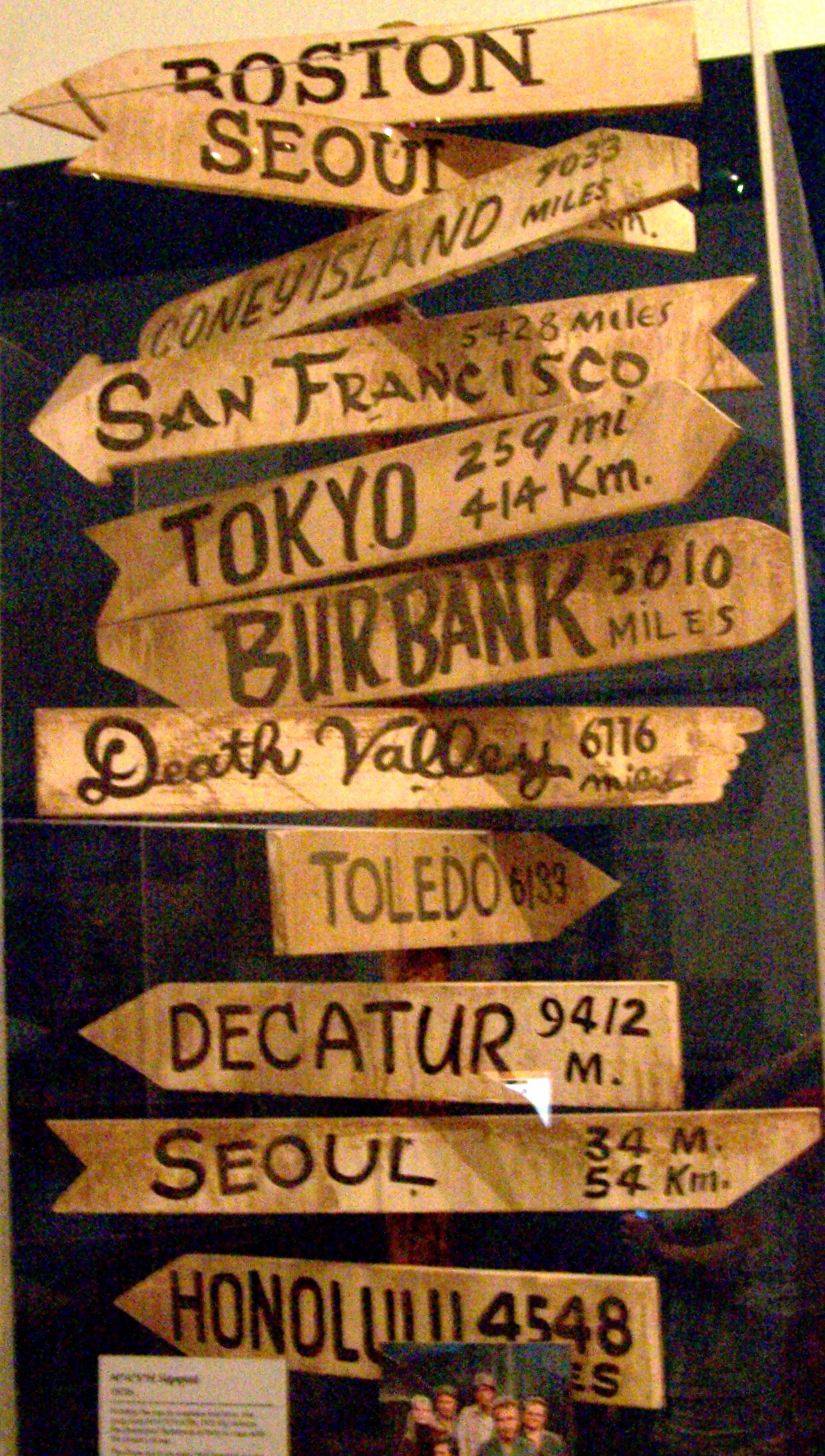
All of we Kemetic folk are different. We come from different places, have had different sebau  (teachers) It feels a little  bit like that road sign on the set of M*A*S*H* that showed where everyone at the 4077th where home was.   The road sign served as a starting place,  rather a map of  how to get there. More than simply telling someone that there is just one temple, one group or one single right way to get to where to go, it will, I hope that something like this might serve more people without any accusations of an agenda.

The truth of the matter is that civilization was born in Kemet.  The pharaohs were black, and varying degrees of brown and every other skin colour that was known in the ancient world at the time. This is inevitably what happens in an integrated and cosmopolitan society.  By my saying this, it does not make me a revisionist or a racist. Speaking only for myself, my goal is to welcome any and all evidence and discussion, except that which promotes racial hatred and modern cultural divisions that seem to have escalated to all time highs over the last few years.

Like most within the pagan and polytheist sphere, we Kemetics have our share of issues to deal with. We have our dramas and disagreements but overall, I don’t believe it’s anything that cannot be overcome.   So…..we can choose to continue to arguments over religious doctrine or other points of contention, or point fingers about who “stole” what from whomever else, or we can acknowledge the fact that for each or us Kemet is a constant call in our lives.  Just as in Kemet’s  antiquity, I believe that  cultural exchanges and sharing were and are the norm.  Someone who was well-traveled or could appreciate the customs of the people and places that they visited was welcome as a guest and greeted as a hero or heroine when they returned home to share the knowledge that their travels had afforded them.  Being a good, respectful guest was the most important thing of all.  I think the akhu (ancestors) have plenty to teach us on many levels and it is something that the world desperately needs.

I believe that we can have that and be the richer even if all we do is try.  We are most us here because we love Netjer or the Netjeru and honoring the akhu.  The land of Kemet IS Zep Tepi, the First Time.  It is inevitable that it calls to our kas with such depth and intensity that we cannot turn away – not even if we wanted to.

But what about Kemet is it that calls us?

Is it the sophistication of design? Is it the fact that science and medicine, literature and the beginnings of writing were born on the banks of the Nile?  What do we as modern, 21st century people hope to gain by reviving the religion, the culture and the values of that bygone time?  I believe for everyone the answer is different.  Even as a child, I dreamed of a day when more people would realize how wonderful ancient Kemet was and there would be a push to restore temples and bring a language back from the Realm of the Dead.   With the advances in Egyptology and the push to reconstruct events, study DNA and analyze the overwhelming amount of data coming out of Egypt on an almost daily basis, we may very well see some of these ideas and pushes become a reality.

Hedwig Storch via Wikimedia Creative Commons LicenseWhat I want, what I am asking in this blog entry is for people to think long and hard about what it is in Kemet that draws them so deeply.  I sincerely want to hear from each and every one of you – not because I am starting a new group; but rather because it’s something I’ve felt called to ask and to do.  I am not doing this for any group, even though I am currently a member of a group.   I respect and care for enough people outside of my own respective group and have the luxury of conversing with them in a dialogue of mutual respect.  It is of paramount importance to me that this spirit of cooperation continues.    For some, such as myself,  Kemet was a call felt at a very young age that simply would not let go.  For others, it is a reconnection to their own proud history and culture.  For others, it might be something else entirely.   Whatever it is – it’s important.

It is my hope that the dialogue between all  of the different groups can somehow push us a little closer to having a clearing house of knowledge, lists of books to read, online courses being offered for free or at a nominal fee, groups that get together socially for no other reason than to share that interest. Later, we can discuss the potential of boards, or groups on Facebook or Google+ in order to discuss those resources that we find.   Whether any of us views it as a culture, a spirituality, a passing interest or even a fandom, it is my personal belief that  none of us individually knows nearly as much as all of us do collectively.  It is also my belief that if we try we may yet make even more of our dreams about Kemet come true.


5 Comments

Filed under indigenous, Kemet is Cool Project, kemetic, Ma'at, pagan, politics, racism, rants, Religion, Sekhmet, Uncategorized, update

Losing Your Facebook Name & Getting It Back: It Isn’t Really About You

mynameisAfter losing my name on Facebook to a vindictive high-visibility  online troll, I penned a blog post, “The Importance of Names“.  In recent days, I have been able to reclaim my online name / DNA intellectual property. This has been made possible because of the diligent efforts of a very organized and tenacious community of drag queens and others within the LGBT sphere.   I am grateful more than I can say to Miss Roma and Lil’ Miss Hot Mess and all who fought so long and so hard for their patience and dedication and sense of fairness  in going after Facebook’s real name policy.

Recently, I have seen posts coming across my feed that somehow Pagans et al are being “targeted” by Facebook in some sort of modern day persecution.  I am never sure why these folks seem to think that everything is an inconvenience is somehow someone “targeting” them because of their beliefs or how they look, dress or how they think.  While it is true that the dominant culture, and especially corporations within the dominant culture do this, unfortunately, I think that the concept of persecution in this case is more than a little inaccurate.

Let me state at the outset to those in the Pagan and Polytheist communities that this is not about your religion.  My case was very probably a personal vendetta by someone else, and Facebook’s real  name policy played right into this.  For most people losing their chosen screen names, whether they be professional names, pseudonyms for those who want to avoid abusers, American Indian tribal names, or Initiatory names of those within the alternative faith communities, it is only about one thing.  It is about the money that your information, online and buying habits represent to advertisers, both current and potential, on Facebook. Having demographics be as accurate as possible to those potential advertisers who are more than a little interested in what you do,  what interests you and how you spend your money online .

In short this is not about “targeting” any group for who and what they are.  This is about Facebook selling YOUR demorgraphics and YOUR information to advertisers. They cannot effectively do that when you have a pseudonym of any sort. When I lost the name of Fanny Fae on August 29th and had to use my birth name up until last week. With the help of Lil Miss Hot Mess and her forwarding my information as per the instructions, I was able to get my name back in less than 12 hours.  YMMV.

If you have lost your chosen Facebook name for WHATEVER REASON, please click the bright “My Name Is” button below and FOLLOW THE INSTRUCTIONS. There are no guarantees, but if people are losing their names, then they must be both methodical (and CALM!) about getting them back. All of the bleeping screaming about religious discrimination, ranting and online petition signing isn’t going to do a goddamned thing.   Beat a pillow, scream if you need to, but wait and come back to the keyboard when you are calm.   Sure it is frustrating and it hurts and it can leave you exposed and vulnerable and it can cut at the very essence of who you are. Those things can make it feel as if it is very personal.   I promise you, it most probably isn’t.  The key, however,  is to keep your wits about you and push back with singular determination.   Facebook sees you as just a packet of information to be packaged and sold. That’s the business they are in.  Changing an imbedded corporate policy is never easy, but if you are tenacious, it can pay off.

https://dl.dropboxusercontent.com/u/17627761/mynameis-fbgraphic.png

It is more than past time for the pagan community etc. to quit their mooing and start doing!  It would also be a wonderful gesture if some who are able to benefit and get their names back after this Facebook fiasco to actually remember to take the time to thank Sister Roma and Lil’ Miss Hot Mess for what they have done to make this possible.   Because of them and their efforts Facebook has now implemented the following policy – which many still are unaware of.  Facebook just implemented the policy allowing people to select names other than real names so that they know – but that you can keep yourself safe.

What Other Names are Allowed on Facebook?

As I have said repeatedly, there are no promises for everyone being able to get their assumed names back. However, since I am writing this after having direct experience I have found that if you really are focused, it is possible to get what you want  in all of this.  Try it and see.

We just need to dispassionately lay out the facts to the powers on Facebook that be because each request to get a name back is being reviewed on a case by case basis. Speaking only for myself, I know that I am fortunate and probably got my name back very quickly because I have been branding with this name for more than a decade. I own the domain, I write on multiple sites under this name and it is pretty clear that I have been out there. Others may not be so lucky, but when you are armed with as much of your information as possible, chances are Facebook will take that into consideration. It is up to each user to make their case, because to Facebook’s marketing team, you and your habits online are $$$.  They are in the business to make money.

So why did this happen in the first place?

Let’s be honest; in spite of Mark Zuckerberg’s frequent and very public protestations to the contrary over the years, Facebook’s Real Name policy is NOT about safety or trust.  It is about money, and the bottom line is always about the bottom line in corporate culture.  While  Zuckerberg thinks that anyone who uses a pseudonym or alternative name has a personal integrity that is lacking, that argument is disingenuous. What is really being left  unsaid is that the users who use an alias only have “less integrity”  in terms of the data that those who use of Facebook provide to their real customers:  the corporations and advertising folks who mine that data in order to sell we the users of Facebook to those advertisers or those interested in all of the things we do and are interested in online.  The deal is that those advertisers want your eyeballs and what’s in your wallet on their merchandise.

In a word, WE and our buying choices as consumers, are in fact, the product.

This is why the Facebook website / service is “free”, and is almost certainly likely to remain so because your information is just that valuable to them.  We  need to now ask ourselves, just how much are we willing to give up to Facebook and other companies who sell our information to those who wish to buy the best  and most information according to that demographic data.

Another point of interest is that around the time all of this real  name push started was when Facebook announced the launch of its Atlas system, which was created as a direct competitor to Google’s in terms of demographic information that could be sold to advertisers and influence the buying public. Facebook acquired Atlas from Microsoft and recently announced the relaunch. Atlas essentially measures demographic information of users so that  marketers can use that online information to target advertising to the right place.  If you are using Gmail or using Google as a search engine of choice, you see this in action without even thinking about it. Facebook wants to compete with this for their own profits and consumers are being managed any way possible in order to insure this.

Thanks to one of my Facebook friends, I found in a USA Today news story that  Facebook’s  chief product officer, Chris Cox recently apologized for the outing off the Drag Queens and LGBT community at large for forcing them to use their real names.   I applaud the apology, but nowhere in the article was it outlined how these brave queens and others in the LGBT community, including myself, would be able to get back our assumed names.  That, thankfully, would come later.  I have my feelings about who the single user was who outed or doxxed so many, including myself. But of course, I know that we probably will never know for sure, but I am absolutely certain that Facebook never let any of those who were harmed know who was responsible.   However,  the chain of events were far too closely related in my humble opinion to be mere happenstance. I don’t trust either party in this case.

We certainly should be aware that corporations such as Facebook care little to nothing about the individuals behind the accounts or their reasons for choosing to use a pseudonym or assumed name.  They only know that when a user chooses not to use the name that is on a birth certificate or driver’s license, the information it can present to those wishing to know the most about you (eg. advertisers and marketers) have skewed information and is not worth as much as if you were to use your given name.

If you are a witch and you use your initiatory name online as a way to keep yourself safe and your boss and coworkers out of your private life, for example, that is not going to be the name on your credit card or your PayPal or bank account.   Advertisers want you to make buying decisions based on the information they serve up to you on a constant basis.  This is how if you click a story link, three other “related stories” will pop up under the link to the story that caught your eye in the first place.  Again, that adds up to clicks per view and companies pay handsomely for those ratings.  And they are not content to just be on your desktop at home or at work: They want to be on your mobile devices and be able to locate you and market to you based on where you are and what you are looking at or near on a real-time basis.  If Facebook can pull that off, that is big time money.  If you use an assumed identity, that again, changes the viability and the effectiveness of that information.  Facebook and the advertisers purchasing that information know that all too well.  And now, so do you.

Say it with me so that it really sinks in this time:  “We are the product.”

Being forewarned is being forearmed and representing yourself online as you see fit and insuring your own personal safety, Facebook’s marketing demographics be damned, is all about getting your own power back.


3 Comments

Filed under business, Ma'at, pagan, politics, rants, Religion, update

The Importance of Names

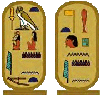
"Cartouches for Sekhmet Meritamen", created by Marc Line for Pan HIstoria.comWhat’s in a name?   Plenty.  A name is the essence of who we are.  It can be the name that we are given at birth, or a nickname which signifies who we are within communities, or it can be an Initiatory name.  Sometimes a name is a persona we choose for ourselves in order to keep us safe from the prying eyes of employers,  or those who wish us harm such as ex-spouses, abusive family members or stalkers who want to impinge on our personal lives and our personal freedom.    Names that do not appear on our birth certificate, Social Security card or driver’s license are no less valid than the initiatory names and pseudonyms that we use.  Some may use a ‘fake name’ to bilk, defraud or deceive others online.  Facebook, Google and many other places have in place so-called real-name policies that are designed to help, but sometimes end up hurting.

This past week, this policy ended up happening to me.   My “real name” is not Fanny Fae. It is the nickname of an ancestor of mine, Frances or Françoise McKay and used the name of this blog, Fanny Fae. My reasons for doing this on Facebook and elsewhere, primarily were to 1) protect myself from my ammo-sucking, gun-toting, “Take ‘MERICA back for Jesus”,  and “Convert to Christ or DIE”,  and “Left Behind”  series-believin’ family members who object to my being a polytheist & lesbian woman legally married to her partner after 22 years, and 2) This name is a brand that I own and intend to keep on owning it.  She started as a fictional character on Livejournal and PanHistoria more than a decade ago and I have fiction and other things that are mine written under that name – and they will stay being MINE.  Those that know me knew of my motivations.  There were never any attempts by me to deceive, defraud anyone. Just a nice safe, almost-anonymous ID to be able to live and to work unencumbered by my religious extremist family and to protect what I perceive to be my intellectual and DNA property.  Most everyone in the writing, Pagan and polytheist communities knows me by that name and I have made quite a few friends with it.

From my understanding, Christian Day, an occult  shop owner with stores located both in Salem, MA and New Orleans, a radio host, author and “warlock” who rose up to take on the Evil Charlie Sheen a year or so ago, decided to out  or ‘dox’ me and anyone else that he knew who had a “fake name”.  He took it upon himself and enlisted the help of his friends, groupies and flying monkeys to follow him in this endeavor.  That is what I was told. I have no idea because I was not online at the time. It really isn’t important at this point how or why it happened or who did it.   I refuse to participate in feeding negative energy to a person who claims he “swiffs” it for his own purposes. The end result was Facebook logging me out of my account and telling me that I must use my real name, but could add Fanny Fae as a nickname in parenthesis.  I did so.

I admit, at first I was angry. This sensation lasted all of about five or ten minutes. Then I realized that with the Sekhmet book, hopefully in production to come out soon, it was probably a good thing to stave off potential objections by those who do not equate this ID with my real name.  When I explain to them the circumstances and my reaction to it, most have been very accepting and understanding.  Some, still safely behind their initiatory names or ones that they have contrived to also stave off inquiries from employers, abusive ex-spouses, etc. have been more than understanding.  I daresay that Mr. Day will not be able to swiff their energy from them either.

The biggest inconvenience to me, so far, has not been my weirdo, religious wing-nut family pounding on my virtual door -( though I do expect this to happen eventually), but so many people in the groups that I either admin or those who I am friends with now asking, “WHO the F*** is Christina Paul?!”   I have to explain to them what happened in a Cliff’s Notes version and it always ends up being o.k..   Most did what I did and just shrugged and moved on.

What companies like Facebook, Google and all of the other social venues and corporate conglomerates don’t understand is that most of our lives are online these days. All it takes is someone with a bit of tenacity, some basic computer skills and a credit card and they can get whatever information on any of us that they want to. The entire backlash by consumers about issues of privacy, should also include the ability of persons such as myself and others to give good reasons why they want to hide behind another name.  Ninety-five per cent of the time, those who do, are not trying to do anything illegal.  They are just trying to live their lives quietly and unemcumbered .  Not everyone who chooses to use a pseudonym has gone through abuse, or has to put up with hands-in-the-crazy relatives,  or employers that want to know what their employees do on their off-time as much as they do for the time that they have those employees on the clock.  Being able to mask at least some part of our lives that we feel is private and not open for public scrutiny should be as natural as closing the shades at night when we get undressed.  We are all pretty much  at least virtually undressed when all of our lives are out there for everyone to see.

With all of the recent bouts of identity theft – whether financial, or someone such as a celebrity having someone impersonate them – of course, knowing who you are dealing with is a very good idea.  On the other hand, there needs to be dialogue about having a choice for those who have very good reasons for wanting to stay hidden.  Companies such as Facebook and Google should not assume that the only reason why people choose “fake names’ or are reluctant to not use real names on their services is for potentially illegal reasons. It isn’t.   Having a safe space to be able to interact with others is of paramount importance.  Facebook and Google, et al, have unfortunately become the village square du jour.    You can always opt not to use those services, but to do so leaves you potentially cut off from what most people use as a support network.   Someday we may  have other choices that offer more privacy -or we can hope that these companies get a clue and realize that they have become part of the problem that allows the rise of social ills such as online bullying and stalking. Companies such as Lifelock and other identity theft and credit monitoring services are doing a booming business these days.   I am left wondering if Facebook and Google don’t get some sort of kickback because they are by their own policies very probably helping to create the problem in the first place.

I know you….I know all of your names.

That is a bit of ancient Kemetic or Egyptian heka or authoritative utterance that is said when you gain knowledge of all of the names of someone and you are set to either magically protect or curse them.  We Kemetics take things like the words we use, and especially names very seriously.  There is the legend about how Aset (Isis is Her Greek Name)  wanted to get the secret name of Ra and by manipulation was able to obtain that secret Name or Ren.   Ra knew that with it, Aset could destroy Him.   But He also knew that without paying the ransom to Aset by giving it to Her, that He would die.  Like that story, our names and how we are identified and move through this world are double edged swords.  They can hold great power and they can be used to destroy us utterly.  As I always have said,  “My name is my integrity”.   Nothing is more potentially dangerous as when something does something in your name that you don’t approve of.   Like your word, your name serves as a bond.  Naming is branding. Some of us like to have absolute control over our names and our branding in order to set us apart from everyone else.  Celebrities, recording artists, authors, etc. know this reality all too well.    The more we are out there and participate in social media, the greater for the potential for companies such as Facebook and Google to be used by those who DO want to do illegal things and bilk others to gain more and more power.   It is a fine balance to walk, and having one-size-fits-all policies serves no one in the end.   These venues have already been used for such purposes.  The real name policy in most of these incidents did nothing to safeguard it from happening.

This is an issue that I think deserves more discussion.   My outing came from someone else wanting to be vindictive and to cause me and others harm.  They failed in that endeavor with me other than it has created a few minor inconveniences.  These have already been overcome, so the major explosion that he likely expected ended up being more like a dud firecracker.   Still, privacy is an issue that will not go away and it will take thoughtful consideration rather than wholesale policies in order to make things more safe for everyone. 

‘Sekhmet Meritamen, Physician of Qenbet’ – by Wbnrnpt, for the website, Ancient Sites, now known as Ancient Worlds

15 Comments

Filed under akhu / ancestors, business, dreamwidth, fiction, kemetic, livejournal, magickal alchemy, mystic woo-woo, pagan, politics, sekhmet, update, writing

Regarding Spiritual Arrogance, Racism & Bigotry

arrogance“Do not be arrogant because of your knowledge, but confer with the ignorant man as with the learned for the limit of skill (art) has not been attained, and there is no craftsman who has fully acquired his mastery.”  – The Maxims of PtahHotep

Sooner or later, we all have to come face to face with the spiritually arrogant.  It may very well be, that we ourselves have bouts of spiritual arrogance of our own to contend with.  It can be as simple as looking down our noses as to why we are right in our beliefs and the other party or parties are wrong.  The whole phrase, “Religious tolerance”,  is not the same as religious acceptance.   Tolerance infers that we are putting up with something, and yet all the time view our way as being superior.  Acceptance means that we can accept the differences in how others do things and how their approach practice without being judgemental about it.

Being Kemetic, I find that this issue often raises its head.  The leadership or membership of one Kemetic group disagrees with and/or dislikes another group because of doctrine or practice, or there is  just plain jealousy.  Accusations of one sect or another being a ‘cult’, or ‘mindlessly dogmatic’ are hurled and understanding is nowhere to be found.

One of the best cures that I have personally found for such an affliction is through interfaith work.  It is the choice to leave our own neighborhoods where the spiritual ghettos seem to get constructed without our even realizing it that seems to help the most.    For me, it began by doing interfaith work with Kashi Ashram.  The experience of having attended Ma Jaya Sati Bhagavati’s birthday celebration and fire puja in Sebastian, Florida was a profound one.   We were also privileged to have witnessed a ceremony in which several dedicants were committed to priesthood. SenyasiMa taught that her way was not so much a religion but a way of being in the world where the centermost idea is to practice kindness wherever possible.   That meeting and that event, however, led me to doing more research into Hinduism and interfaith work with the local Hindu community.  I am, of course, no expert.  However, I do feel that the experience made me, I believe, a better member of the Kemetic priesthood.

Even with all of this,  I realized after a time that I was feeling particularly smug and condescending toward other Kemetics and Neo-Pagans in general. I wanted to get back to my own Zep Tepi – the foundation of spiritual belief and doing ritual work and heka that would make me a better Priestess and representative of Sekhmet.

In recent years, there has been a new resurgence of relgious groups which focus on race and skin color.  I have even been around members of one such group that insisted all of its members get DNA tests in order to ensure that they are of the right blood group – all to prove their lineage to certain historical bloodlines that mark them as “superior” to their human counterparts.  They claim that this bloodline goes all the way back to either the bloodlines of the Tuatha de Dannan or to the Annunaki. The members of this group, which was once headed by a self-styled prince,  fervently believe that rulership, and hereditary nobility sets them apart and entitles them to be a part of a higher caste and class that the rest of humanity. As far as the members of this elitist group are concerned, everyone else who doesn’t share in their bloodline are more or less shuffling herd animals incapable of real thought or any kind of magical or spiritual ability.

Unfortunately, these sorts of ridiculously bigoted nonsensical ideas have migrated their way into Kemetic groups.   Afrocentrist philosophies are certainly not new. I am actually in agreement with the assertion that, yes,  the world’s greatest civilizations did in fact begin in Africa.  Homo sapiens (humans) began in  Africa.  That means that as humans, we all ultimately have a tie there. This is true whether we choose to acknowledge it or not.

In the early days of the internet, the militancy of some afrocentrist groups had reached a fevered pitch.  Some of the members of these groups or their fringe followers would troll the newsgroups on Usenet.  These groups include ones such as alt.archaeology, sci.archaeology or alt.culture.egyptian.  The trolls would start screaming about blackness and racial issues that really had less to do with ancient Egypt at all and more about some sort of bragging rights or never-ending angst over an inaccurate, rendition of history.  One of their favorite claims that still persists to this day is that Napoleon or his troops decided to test their canons out on the nose of the Great Sphinx since the obviously African features of the ancient monument offended their Eurocentric sensibilities.

For the record,  that particular rendition of what happened to the nose of the Great Sphinx is patently FALSE.  Napoleon was very much in love with and in awe of Egypt. So devoted to this ancient civilization, Napoleon enlisted an entire corps of artists, architects and engineers for an expedition to explore and catalogue what they could find there so that they could study it, long after they returned to France.  As a result, this expedition produced one of the greatest inventories of the ancient monuments in the form of the multi-volume, le Description de Egypte.  That Napoleonic inventory of the riches of Egypt is still the most accurate one that we have to date.    Napoleon would have likely put to death anyone who would do something so heinous as to shoot off the nose of the Great Sphinx. In all fairness, some of his men left initials behind on some of the monuments, but such defacements were minor compared to what they are currently accused of having done.

The unconscionable Sphinx defacement was, in fact, done at the behest of a Muslim cleric in the 13th Century AD.  That is just a little bit too early for even Emperor Napoleon, I’m afraid.   Apparently, this particular Muslim cleric was quite upset that tourists went to the desert to see, or as he saw it,  ‘pay homage to’  a graven image.  He considered such behavior and reverence to the past to be very ‘Un-Islamic’.   He saw it as his personal responsibility to put a stop to it.  This is not at all unlike what some within more radical factions of Islam are proposing to either cover the ancient monuments in wax or to completely obliterate them as the Islamic State has done to the city of Palmyra or in the fashion that the Taliban destroyed the Buddhas of Bamiyan.  One can still see the marks from the pry-bars are still visible on the Sphinx itself as evidence. These marks are still visible if you get close enough while reconstruction crews are at present trying to preserve the ancient beast.

So much for the claim by Afrocentrists that Europeans have tried or are still trying to obliterate the monument because of alleged ‘racist motivations’.

Currently there are even more scores of books and web pages almost everywhere you look that posit the notion that melanin = spiritual enlightenment and along with it, the inherent birthright to the kingdom of the Pharaohs.  According to them, people who don’t have sufficient levels of melanin have pineal glands that are pretty much non-functioning.   Proponents of this line of thinking propose the idea that if you don’t have enough melanin in your skin, you may admire ancient Kemet, its culture, people, history, etc.  However, without the requisite melanin in your skin, you have absolutely no business worshiping the ancient Kemetic Netjeru at all.

I have experienced this myself. When I was in my late teens, a  woman noticed the pendant depicting a winged Aset (Isis) and proceeded on a tirade.  Pointing at the necklace she screeched, “How dare you worship African gods! You’d best be looking to your heritage and get your own gods instead of stealing ours!”

As someone who was about 15 years old, I can only say that the experience was devastating to me.  I was quite honestly shocked and hurt for having been the recipient of such vitriol that seemingly came out of nowhere.    I have been told that, unfortunately, my experience is not at all unusual.  Many others,  even  those who have African heritage and yet have lighter skin or are not distinctly African looking, have suffered similar incidents.  For my part, I know that I didn’t choose the Netjeru.  I believed at that time, and I still firmly believe, that They chose me.  They were the ones who decided to show up in dreams and put Themselves in my path wherever and whenever they could.  When things looked dire, I was always reassured when I could look to the sky, catch the sight of a hawk or a falcon overhead.  It served as a personalized reminder that Aset (Isis)  and Heru (Horus) were watching me from overhead and that things were going to change. It gave me the hope I needed to realize that inevitably everything would be alright. How some woman, whom I didn’t even know, inexplicably walks up and tried to tell me that  my connection is not mine at all and to wear Egyptian-themed jewelry was inappropriate was inexplicable. As far as she was concerned, my notions of this were nothing more than some wishful, white girl, honky, wannabi  fantasies and that I should just move along and get me back to a church pew at the nearest Christian house of worship.

It was, and still is, beyond belief.

Racism or bigotry of any sort,  between one culture or sect of humans against another,  is a horrible stain upon humanity.   It is becoming sadly, more and more prevalent in the past decade and more specifically since nationalist sentiments have insinuated themselves in governments throughout the world.   Political correctness discarded for the moment,  I will say that, ‘Yes, we do need to discuss the past.’  The slavery that happened in the Americas from its inception till after the Civil War and beyond as well as the many, many horrific injustices that happened to African-Americans from the Emancipation Proclamation to the Civil Rights era right up to the present day should never be forgotten.   I would never expect anyone  who is of African American heritage to ever “get over it” any more than they should expect me and mine to ever “get over” the Trail of Tears, Wounded Knee I and II, and the enforced sterilization of American Indian Women. That and scores of other dirty little secrets that were a part of BIA and other government policies. The wounds are fresh for many of us, and we are not likely to forget them. Sometimes even forgiving seems like an impossibility. Yes, we need to acknowledge the pain and the sacrifice of the ancestors on whatever side of whatever equation actually went through.  We carry those memories in our DNA.  We carry all of the prayers, the horrors, the sacrifice and the tremendous accomplishments deep within ourselves.  All of these things are carried within our bones and make up the foundation upon which we build our own lives today.  The prejudice, the discrimination, the snide arrogance of stereotyping people into groups based on certain markers, unfortunately, still goes on.

Racism and bigotry, especially within spheres such as religion and culture really are about ignorance. Culture is not something that boils down to skin colour or even regionality. I know what is like to have a  bigotted person tell me I shouldn’t worship Egyptian deities because my skin isn’t the right colour. I also know what it is like to have been raised Indigenous and know that when you are “claimed” by a People as one of their own and adopt that culture as your own in terms of how you identify, NO ONE (!!!) can gainsay that.

One of my favourite examples of this is in the person of Mr. JDK Chipps. He is counted as a member of the Chipps family and a member of the Lakota Nation. JDK himself was born into a white family. This is not particularly notable excpt that he is in no part Lakota or any other Nation of Indigenous Americans by blood at all.  However, because of JDK’s devotion to the Lakota People and to the preservation of lands and his protection of wildlife, especially the buffalo, he was adopted by the Lakota Nation as one of their own. JDK is Lakota now.  Period. Anyone who has ever dared to tell JDK, or the Chipps family, or any of the People of his Nation that he is not Lakota because his skin color finds out very, VERY quickly just how wrong they are in that assumption. What’s important is that the Lakota Nation and his community knows who JDK is and vice versa.  In the end, that is all that is necessary. Those are the kinds of things that simply don’t fit into neat little boxes of blood quantum or DNA. Racism and bigotry are both complex issues. However, knowing who you are, who your People are, and devotion to that – without trying to hold yourself above others, that’s the point.

Even with all of this acknowledgement, however,  it doesn’t take much to realize that we do not solve the issues by screaming at people who are appreciating something beautiful and wonderful throughout the countless civilizations throughout the world, as well as all of the vastly diverse peoples who created them.   It does not help anyone to act belligerently toward sincere people who love the gods and love ancient Egypt or any other culture for itself.  Telling them to go away, or judging them as some other, or “Them” inevitably ends up being a kind of racism or bigotry itself.  What happens, then, when children come from a mixed racial background want to find out who they are? What is considered “African enough”?    What is Indian enough or Asian enough or European enough or whatever?   What parent, ancestor or heritage should someone eschew in order to fit into these newly constructed ideas of race = culture?    These days, DNA testing can narrow down where certain groups of people were and how they migrated as it .   Humanity has been meeting, mingling throughout history.  PBS has had some wonderful specials on just that. It is amazing and awe-inspiring just how far science has come in that it has determined that we truly do carry our akhu (ancestors) within us, but it doesn’t get to the heart of the issues surrounding race or culture.

So what happens, if after the DNA test results come out, and a person is actually presented with the scientific evidence and knowledge that none of their blood ancestors cannot be traced to a specific tribe, area, country or culture?  What if certain people of colour have no connection to the spiritual things that resonate most to them?  How far does it go when someone finds out that their own bloodline has been “polluted” somewhere along the way, and they are not purely one thing or another?  When does it stop and where does it end?

Certainly, our akhu of ancient Kemet would not do that. They had no problem with people worshiping their gods – or allowing them to bring their own into the country just as long as the ideal of Ma’at was adhered to.   If faced with such a reality, does that mean that those with no DNA connection would also have to stop paying attention to the Netjeru and go only with what their true ancestors did and how they believed?  What about those who are called – though we may not ourselves understand what a specific Name of Netjer may have in mind for that person – and they are still called?  Is it ‘cultural appropriation’, then, to love something and want to appreciate it and give thanks for it by murmuring a prayer to Sekhmet or to HetHert or Ptah somehow wrong?  Is holding one’s hands up in the gesture of henu or praise at seeing the sunrise and giving thanks to Ra somehow taking away from another culture and ‘stealing’ from it?

I don’t believe that it is.

There is also another disturbing trend within the ranks of Afrocentrists and Afrocentrism and that is the use of materials that are 1) completely out of date, eg. the public domain works of Sir. E.A. Wallis Budge.   I have written about this before.   Yes they are cheap, sometimes they are even free – but during the time that they were created, the author was clearly a citizen within a large empire, populated by people who did not appreciate the Egyptians for who they were but rather wanted to do as much as they possibly could to make them like themselves.  During the Victorian era, expeditions, particularly to Egypt and the ancient world, were more easily funded if it promised to underscore the thoughtform and religious beliefs of the status quo based on some ancient model that it was allegedly derived from.   These same people were the very definition of eurocentrism – far more than current Egyptologists who offer more current up to date and affirming works.   Many if not nearly all of those early authors were racists.  They believed in things such as the heiress theory and the idea that a certain caste and class of people oversaw the darker skinned commoners and did everything that they could to keep those bloodlines pure.   One of these authors went as far as to say, “Egypt must never be allowed to partake of Africa’s spirit.”

Budge and his contemporaries were cut very much from the cloth of eurocentricity during that time.  Of course, the times have changed and we now have in the ranks of egyptology, those who are not just native born Egyptians – but also Americans, Europeans, Asians,  and Africans from all over the continent.  In the days that Sir E. A. Wallis Budge was penning his works, there was an underlying idea of an apartheid system with a ruling class made up of a white minority who oversaw all aspects of power.  They set themselves up so that they might oversee the majority of darker skinned non-European people.  Budge ‘s works do have some good typesetting, however, his translations were completely off in many ways.  To the point, we need to not only take the contents of books into account but also the the eras in which those writings were produced and how the cultural mindset of the authors whose views very probably bled over into the thesis and conclusions that were made.

How is this sort of prejudice and racism any different from what the slave masters of the south believed?  How is it different from the views that were put forth in Nazi propaganda by Adolph Hitler and the Third Reich? How tolerable would it be for those who are not of African-American decent to make the same sort of bigoted claims that many within afrocentrism seem to make today?

My guess is that the public outcry and the flurry of social media backlash would be astounding if not downright deafening.  What makes us different in terms of religious beliefs, culture, and out outward appearance is, I believe, what makes us beautiful.   There is a beautiful line of dialogue in that wretched film, “Robin Hood: Prince of Thieves”, where a little English girl  comparing her skin colour to that of  the Moor, Hakim (played by Morgan Freeman) asks, “Why did God paint you?”   And Hakim smiles at her and gives her the most simple, yet breathtakingly beautiful answer:   “Because He loves infinite variety.”

Infinite variety should not instill arrogance in any of us. If anything, it should instill an almost overwhelming feeling of awe.
lotusplaceholder

Sources Cited

Furr, Grover. “Fallacies of Afrocentrism.” Fallacies of Afrocentrism. Monclair State University, English Department, n.d. Web. 18 June 2014.

Jaroff, Leon. “Teaching Reverse Racism.” Time. Time Inc., 24 June 2001. Web. 23 June 2014.

Ortiz de Montellano, Bernard,  Melanin, Afrocentricity, and Pseudoscience”, Academia.edu

Ortiz De Montellano, Bernard. “Magic Melanin: Spreading Scientific Illiteracy Among Minorities.” CSI: Community for Skeptical Inquiry. N.p., 30 Dec. 192. Web. 15 June 2014.

Save

Save

6 Comments

Filed under afrocentrist, akhu / ancestors, indigenous, Kemet is Cool Project, kemetic, racism, Religion, sekhmet

The Symbolic Use of Color in Ancient Egyptian Art

My friend, Sard, has written a wonderful piece on the use of colour in Ancient Egyptian Art. As per usual, her writing and citations are absolutely impeccable.  This piece is well worth the read and addresses many questions and misconceptions on the topic that are floating around online.

The Symbolic Use of Color in Ancient Egyptian Art.

Leave a comment

Filed under Kemet is Cool Project, kemetic, reblogged, Religion

Regarding Sekhmet’s Stolen Image

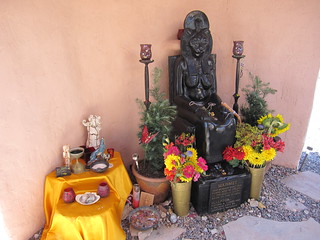
Chris M. Morris, via Creative CommonsSometime on Good Friday, the Goddess Temple in Cactus Springs, Nevada was invaded by thieves. The space that had always been open to anyone wanting to come visit the Goddess, to pray and to enjoy the peace of the sanctuary could do so unhindered. It was this that made it possible for those with a more heinous mission in mind to succeed in stealing the centrepiece of that place, a four  foot tall statue of Sekhmet that weighed just under 100 pounds.

The Priestess in Residence came into the Temple to find Sekhmet gone. The thieves had left behind only tire tracks, and in them was the necklace that the statue had been wearing, indicating that she had been tipped while being spirited away in the night from the place that had been her home for the last 21 years.

For the celebration of Earth Day that was scheduled to be held at the Temple, a picture of the statue was set in the place of where the image once stood.  The Earth Day Celebration went on as planned.

Right now, there is much speculation within the Pagan community as to why it happened or who might have done it.  The first thing that came to mind is that somehow, since it was done on Good Friday, it was religiously motivated, as if to remove an image sacred to those who are not a part of the Big Three monotheistic faiths.   Others have suggested someone just wanted to make Sekhmet their own.  Others have posited that because of the area of the country and because Sekhmet personifies power itself, that the culprits could be drug dealers who believe that stealing a bit of mojo is perfectly acceptable.  Whatever the motivations are, the Pagan community and all those who love Sekhmet are upset by the theft.

Initially $500 was being offered for information that led to the arrest and prosecution of the culprits. That has since been kicked up to a $2,000 reward.  I would not be surprised if that figure increased yet again.

The unfortunate byproduct of this tragic event are those Pagans who wring their hands and drape themselves over the furniture, wailing that this is about religious persecution – or that if this had happened in a Christian church or Jewish synagogue, the press coverage would somehow be more than it has been.  I understand the deeply personal feelings that people have toward Sekhmet and that someone would do something so terrible is frustrating and brings up anger, sadness and the overall feeling of somehow being violated. I also know what it feels like when the issues and events we hold near and dear are not adequately covered as we feel they ought to be.  I think anyone who is on the receiving end of being even in a small way touched by any sort of crime – be it a hate crime or something else must feel that irritation that no one could possibly understand.  Pagans in particular, seem to love to latch on to crises of this type because it makes them feel as some “persecuted other”.  I never saw much use in wallowing in that sort of self-pity, personally.

To be honest, I never thought I would see the day Sekhmet’s children would resort to playing the victim card and yet I have in these past few days. Some have resorted to comparing and contrasting our religious site being desecrated and comparing our pain to the pain of others when thier faith was lashed out against. Somehow they conveniently have forgotten in another crime that is unrelated but took place just before Easter where  three innocent lives were lost last week during Passover.  Ironically, all three of the victims who were slain by a white supremicist were Christians.   It is my view and in the interests of ma’at that I believe that no one should be singled out, begrudged or feel persecuted for their beliefs, or have their sacred spaces violated. The ones who whine about how we of “Other” faiths that are not Jewish, Christian or Muslim are so very persecuted and discriminated against conveniently forget the burned churches, the desecrated mosques, the ravaged Sikh temples, that have all  have been the scenes of senseless violence and desecration, all  based on hate and intolerance. Our prayers go out to their families and our voices whisper hopes toward peace and understanding.  It is what we should do for each other as human beings. Skin colour, race, religious conviction, sex, sexual preference and any number of other things does not trump the fact that we are all human beings and have to share the space, so to speak.

While the stealing of the statue is a tragic, heinous thing, too many within Paganism’s ranks  love to use that common excuse that gets handed out is to blame the media – especially when screaming “religious persecution”.

This, in my personal opinion,  is not an act of persecution. We need to stop with the assumptions that somehow it was. There were no slurs painted over the space, the building was left intact- they took the statue, something that cannot be replaced. It’s a theft. Cameras may be necessary as a precaution to insure against future thefts, or worse, the safety of worshipers. That’s the way of things these days. It has to be, unfortunately. Slanting the story is not helpful.  We now live in a world where that kind of trust is not something that can be easily given to just anyone. We used to sleep with our doors unlocked and our kids could play in their own front yards. Both things are becoming increasingly rare now – but of course,  that has nothing to do with religion. It has to do with a society that is largely out of control.

We are not the dominant religion, that is true. We are not Jewish, Christian, or Muslim, but we can practice our religion for the most part unmolested. Do people lose their lives here over being pagan? Hardly. That is what the comparison with the Passover shootings was about – and it is relevant. Can people in India, Africa, and even Egypt itself say the same? Absolutely not. I know of native Egyptians who do worship Sekhmet – but they cannot do so openly or it is a death sentence.

There is no point to the practice of comparing and contrasting of pain and transgressions and tresspasses against “Us” versus the ones suffered by “Them” – whichever side we happen to be on.  Any religion being oppressed, any desecration of a holy site is an outrage and intolerable. As a Priestess of Sekhmet, I ask is our suffering any greater than the churches that get burned down, the mosques that are desecrated, the medicine wheels that are destroyed?  No. Absolutely not.

Whomever did this – be they someone who lusted for Sekhmet’s image itself, or someone in the drug cartels  or someone just doing something ignorant and hateful, I can say without reservation that they will have literal hell to pay.  In spite of Sekhmet’s loving, healing aspects – and She has many – there are very dark parts of this Goddess that are invoked when Ma’at has been transgressed.   To those who know Sekhmet and those “darker” aspects of Her, know without any shadow of a doubt that the move was a very stupid one indeed.

That statue will be returned – or not. But we are undamaged, and Sekhmet’s worship is undeterred. One thing is for certain, however, those who stole Her image will get what they have coming to them. I know for a fact, Sekhmet’s Arrows Do. Not. Miss.

In my years of experience, Sekhmet, as far as Deities go,  is most definitely NOT  a victim; and neither, I dare I say it, are Her children. We will not curl up into a ball and wail and bemoan the situation. We will not stop doing what we have been doing since the resurgence of Sekhmet’s worship in the world.  We know who our Mother is,  and She knows us.  We who know that we belong to Her carry Sekhmet within us.  Our minds hone in on Her with a singular focus.  We do this because She IS the very Personification of Power or Sekhem itself. To succumb to this blow is to give that Power away.

Rest assured, we have absolutely no intention of doing that.

(Mirrored at niankhsekhmet.com)

18 Comments

Filed under kemetic, pagan, politics, rants, Religion, sekhmet, Sekhmet, update

‘E’ is for Eye

eyofra

Painting on papyrus of a pectoral of the Solar Eye from the treasures of Tutankhamun

The eye has served as a powerful image for humanity for millennia. The Eye, in Kemetic belief, centres around the Udjat Eye – which is that of protection.  Also the Eye of Heru (Horus is his Greek name)  and the Eye of Ra – which are separate entities from Ra’s more than 70 forms – and can function independently of him.

Even in the earliest periods of Ancient Egyptian history and culture , the sun and the moon were often regarded as very eyes of the Great Falcon, Horus. Later the two were differentiated in that the Eye of Horus was the Left Eye or the Moon, while the Right Eye was Ra or the sun. One particular myth which comes to us from the tomb of Tutankhamun, talks of how Horus’ eye was blinded but then restored by Hathor – who is Herself an Eye of Ra.  This ties into the cycles of the moon and of the waxing and waning action of that heavenly body that is ever present above us.

The more well known “Eyes of Ra” are HetHert (Hathor), Sekhmet, Bast, Wadjet, Mut, Meretseger and even Aset (Isis).  The Eyes of Ra were considered to be the protectors and enforcers of divine law. Probably the best known myth surrounding this is the “Destruction of Mankind” where Hathor, the goddess of love, beauty and all that is good is told that Mankind has rebelled and attempted not only to overthrow the Netjeru (gods) but destroy them utterly,  is sent forth by Ra in order to punish them : Thus Sekhmet was born.

These goddesses, known as Eyes also resided in the crown, or uraeus that was upon the brow of royalty.  These goddesses held the power of the King and their power is manifested through him. This is where the function of the  Queens or Great Royal Wives were the stand-ins for the Eye Goddesses, such as Hathor and Isis and insured the protection of Kingly Power and function within the Two Lands.

The Eye of Horus, or Eye of Ra or Udjat Eye were all a part of this greater protection.  There were almost always eyes included within funerary equipment in the form of amulets, and painted motifs on coffins, walls.  The Eye was a major theme to protect not just the pharaoh, but common people as well.  It worked to keep away evil, to insure the path toward the Afterlife of the Duat was kept clear.   The sailors of Ancient Egypt would often paint the eye on the prow of their ships and even skiffs to  insure safe travel.  Even today, modern Kemetics will have Eyes either painted on their vehicles, or in similar fashion to the Fish motif of the Christians, they will have an eye on their car.  I certainly have them on all of our vehicles.

The Eye as depicted in Ancient Egyptian art is based off of the markings of falcons, such as the Peregrine Falcon ( Falco peregrinus ), a totemic representative of the God Horus.  As depicted on many Eye artifacts, whether it be an actual amulet, piece of jewelery or a painted motif, shows the “teardrop” marking near the bottom of the Eye, not dissimilar from the markings on the Peregrine falcon.  A similar line is also found just below the eye of the African Cheetah, who at times can be taken to represent Eye Goddesses that take the form of big cats.

Hieroglyphically, there are several symbols for the Eye. Gardiner Sign list, symbols D4 through D17 either depict the Eye or parts of the Eye.  The attached meaning in Ancient Egyptian to these often talk of “doing” or “making” or one who “makes or does”.  This idea ties rather emphatically to the eye and what it symbolizes as being an active rather than a passive role.  “Here comes protection”, or “The Eye goes forth”, which could be in a protective or punishing type of function.   The Eye of Ra is there to protect and to defend authority and keep the balance and either defend or restore ma’at.

https://i0.wp.com/upload.wikimedia.org/wikipedia/commons/thumb/f/f5/Oudjat.SVG/200px-Oudjat.SVG.pngThe Eye is also used symbolically within Ancient Egyptian mathematics as a sort of symbolic break down for the concepts of measurement in the form of fractions.  The Rhind Mathematical Papyrus and the Lahun or Kahun Papyrus, both have tables of unit fractions (1 as the numinator), and scribes would often have these tables for use within their work.

The various parts of the Eye would be broken down in this fashion:

  1. Right side of the eye = 1/2
  2. Pupil = 1/4
  3. Eyebrow = 1/8
  4. Left side of the eye = 1/16
  5. Curved tail = 1/32
  6. Teardrop or downward marking= 1/64

Unfortunately, however, studying this particular diagram does nothing for those of us who are mathematically impaired, no matter how much we love all topics that pertain to Ancient Egypt!

1000px-Ancient_Egypt_Wings.svg

Another symbol of the Eye of Ra in specifics is the sun disk that appears on the heads of solar deities in the Egyptian pantheon, such as Sekhmet, Horus, and even Ra Himself.  The sun disk and the Uraeus at the centre were protective and punishing at the same time.   The sun or Ra moving across the sky could be found in the symbolism of the Solar Barque, which carried Ra across the sky each day. In the Barque of Ra or the Solar Barque, other deities rode with Ra.  Certainly the body of the heavens was equated with the Celestial Cow who travels with Ra.

The symbolism of the Eye is central to Ancient Egyptian belief and the complexity of everything this one symbol can encompass can be both complex and at times confusing. While the Eye was a protector, it was also a punisher of wrongdoers.  While it was protective of that order or Ma’at, it was sometimes difficult to control and would tend to wander.  The cycle of the Wandering Eye returning to the Two Lands to signify that balance would once again be restored was met with great joy and merrymaking. When the Eye is restored and reestablished, we, too, are likewise restored and reestablished as well.


Resources:

Roberts, Alison. Hathor Rising: The Power of the Goddess in Ancient Egypt. Rochester, VT: Inner Traditions International, 1997

Roberts, Alison. Golden Shrine, Goddess Queen: Egypt’s Anointing Mysteries. Rottingdean, East Sussex: NorthGate, 2008.

Roberts, Alison. My Heart My Mother: Death and Rebirth in Ancient Egypt. Rottingdean, East Sussex: NorthGate, 2000.

Shaw, Ian, and Paul T. Nicholson. The Dictionary of Ancient Egypt. New York: Harry N. Abrams, 1995. Print.

Wikipedia, “The Eye of Horus”. Web.

Wilkinson, Richard H. Reading Egyptian Art: A Hieroglyphic Guide to Ancient Egyptian Painting and Sculpture., p.176 – 177; London: Thames and Hudson, 1992

1 Comment

Filed under Hathor, Kemet is Cool Project, kemetic, Mut, pagan, Religion, Sekhmet, Uncategorized

D is for Dancing & Drumming

dancers For those of us who have been raised with an intimate knowledge of our Indigenous culture, we know that dancing is an important part o our and many cultures throughout the world. For myself, hearing the sound of drums and the sound of bells and jingle dresses and the singing along the powwow trail begins at the first sign of spring and continues on well into the fall. We dance, because we can. We dance and sing and beat drums and it serves as an affirmation of life; our own heartbeat and the heartbeat of everything and everyone around us. People gather to dance and to sing and to celebrate the rhythm that permeates every aspect of our existence.

Dancing and music figure prominently in our religious and ritual practices as well. Dance is a meditation, it can send us into a trance and be a way for us to express emotion, ecstasy and connect us to the Divine. The truth of the matter is that dance has been a part of human history or prehistory around the world since probably before Homo Sapiens became fully bipedal.

The first great culture to really infuse its entire society with the magic of music and dance was that of Ancient Egypt. The Ancient Egyptians enjoyed life to its fullest and no celebration in Ancient Egypt would have been complete without music and dancing. At parties, singers and dancers performed to the music of harps, lutes, drums, flutes, cymbals, clappers and tambourines. During festivals, crowds chanted and clapped, carried along by the vibrant rhythm of Egyptian orchestras, while dancers performed amazing feats, leaping twirling and bending their bodies in time with the music. It was so important a feature of everyday life that musical instruments – frame drums, harps, clappers, sistra, and other instruments found their way into the tomb of those who passed to the Beautiful West and their entertainment in the afterlife.

Most of Egyptian secular and religious life was marked by the performance of music and dance. This important aspect of daily life of the Egyptians is depicted as early as the Pre-Dynastic periods. Ceremonial palettes and stone vessels indicate the importance that music had even in the earliest of periods. The importance of music in daily life in Ancient Egypt is underscored by the large number of musical instruments found in museum collections around the world.  Of the several terms used in ancient Egyptian to describe dance is ib3.

In many banqueting scenes found within the tombs of the Ancient Egyptians, the banquets appear to be more secular. Shown in these scenes are an idealized rather than any actual event. The basic components of these scenes changed very little throughout Egypt’s history, until the New Kingdom. Around the 18th Dynasty, there is a marked change of character, in the song, dance and the overall “feel” of these scenes. At this time we see a marked sense of erotic significance. Lotus flowers, mandrakes, wigs and unguent cones, as well as men and women clothed in semi-transparent garments and the gestures of the banquet participants. Music, love and sensuality go hand in hand in most civilizations, ancient as well as modern, and in different spheres. Overall music is a major component of life, an important piece of both secular and religious life.

NileGoddessDance was far more than just an enjoyable pastime in Ancient Egypt.During the Pre-Dynastic period were found depictions of female figures, perhaps of Goddesses or Priestesses, dancing with their arms raised above their heads. The act of dancing was undoubtedly an important component of ritual and celebration in Ancient Egypt. The Neolithic figurine of a goddess or priestess that currently resides in the Brooklyn Museum is commonly referred to as “the Nile Goddess” or “Nile Dancer”. The figure has arms that are raised above her faceless head like some sort of pre-historic ballerina. Her body is slender with ample breasts and broad hips. Some have speculated that her graceful limbs lifted above her head are to emulate the horns of the Goddess Hathor, who was the personification of the joys of music dancing, love and life itself. This particular piece of very early ancient Egyptian art has been an inspiration for many modern sculptures and art lovers just in its beautiful simplicity.

girlmusiciansPeople from every social class were exposed to music and dancing. Manual laborers worked in rhythmic motion to the sounds of songs and percussion, and street dancers entertained passers by. In normal, daily life musicians and dancers were an important and integral part of banquets and celebrations. Dance troupes were available for hire to perform at dinner parties, banquets, lodging houses, and even religious temples. Some women the harems of the wealthy were trained in music and dance. Unlike today, however, no well-born Egyptian would consider dancing in public. The Nobility would employ servants or slaves to entertain at their banquets to a offer pleasant diversion to themselves and their guests.

Elizabeth ‘Artemis’ Mourat, professional dancer and dance-scholar categorized the dances of Ancient Egypt into six different types: religious dances, non-religious festival dances, banquet dances, harem dances, combat dances, and street dances.

muudancers1There were certain ritual dances that were crucial to the successful outcome of religious and funerary rites. This is particularly true of the Muu-Dancers. These dancers wore kilts and reed crowns and performed alongside funeral processions. Funeral rites often employed or were based off of the Songs of Aset and NebetHet (Isis and Nephthys in Greek) and the retelling of how Aset searched for the body of Wasir (Osiris in Greek) and reassembled his dismembered form for burial and restored to eternal life through Her prowess and skill in magic. This period of singing, dancing, drumming and lamentation was said to last over a period of five days. It was through these rites that it is believed Roman mystery cults arose.

With the emergence of the cult of Wasir dance was a crucial element in the festivals held for both He and Aset, His sister-wife. These festivals occurred throughout the year. Dance also figured prominently in the festivals dedicated to Apis. Another deity that has been linked to dancing, is the Dwarf-God, Bes. He has been depicted in both reliefs and in statuary playing a tambourine and dancing, denoting the idea of using dance in order to drive away evil spirits. Images and amulets of Bes were often found in and around the birthing chamber for women who were giving birth.  In these images, Bes is quite often shown playing a tambourine or a drum. Wikimedia Commons

acrobatsmThe act of dancing was inseparable from music, and so the depictions of dance in Pharaonic tombs and temples invariably show the dancers either being accompanied by groups of musicians or themselves playing castanets or clappers to keep the rhythm. Little distinction seems to have been made between dancing and what would be considered today as acrobatics. Many dancers depicted in the temple and tomb paintings and reliefs show dancers in athletic poses such as cartwheels, handstands and backbends.

Detailed study of the depiction of dancers has revealed that the artists were often depicting a series of different steps in particular dances, some of which have been reconstructed in the modern era. Movements of Egyptian dances were named after the motion they imitated. For instance, there were “the leading along of an animal,” “the taking of gold,” and “the successful capture of the boat.”

Men and women as a general rule and in the more conservative society that was Ancient Egypt were never shown dancing together.  The most common scenes depict groups of female dancers often performing in pairs and more rarely, men dancing in groups.  Dance was done in private chambers as well as public festivals and gatherings, in the streets as well as Temple rituals. The importance of dance has not lessened over the years, it has maintained and is carried on even today.  Professional dancers, musicians and other performers, though they are often admired for the work that they do, are not often given a high status within society.  Because they wander the country side  often with men to whom they are not related, especially if they are women, this sort of behaviour is still rather looked down upon – especially within village societies.

There was a notion within early Egyptology that noblewomen  or women of a certain class or caste would never engage in dancing except in private.   The only exception to this idea were the dancers, singers and musicians that were dedicated to the service of a deity, for example.   The dancers that are depicted within the ancient tombs are often described or depicted as being a part of the tomb owner’s immediate family.  As a direct relation to the deceased then any taboos were lessened.   Today, women may dance within the privacy of their own homes, or that of a family member, but never in public.   It is a good idea that depictions in tombs were never intended to be viewed again by the living once they were sealed, and as such served as a private residence for the deceased.

Modern day bellydancing has a little resemblance to the graceful and acrobatic gestures that were a part of dance in antiquity. Because of so many external influences – the Greeks, Romans, and influx of other cultures over the centuries, not to mention that dance in Egypt as also influenced by the influx of Islam into the region.  In spite of all of this, however, we can still see within Egyptian culture the idea of dancing just for the sheer love of it.

AUTHOR’S NOTE: Most of this piece is a reworking of a section of my website, ‘The Ancient Egyptian Virtual Temple’, 1995 -2016, Copyright Christina Paul &Ma’at Publishing.

Other Resources

Manniche, Lise, Music and Musicians in Ancient Egypt British Museum Press, 1991. Print.
Threee
Redmond, Layne, When the Drummers Were Women: A Spiritual History of Rhythm Three Rivers Press, 1997. Print.

Shaw, Ian, and Paul T. Nicholson. The Dictionary of Ancient Egypt. New York: Harry N. Abrams, 1995. Print.

Spencer, Patricia, “Dance in Ancient Egypt”, Near Eastern Archeaeology, 2003, p 111 – 121

Leave a comment

Filed under Ancient Egyptian Virtual Temple, kemetic, pagan, Pagan Blog Project 2014, Pan Historia, panhistoria