Magic and Money

Josephine has tackled this issue as few other authors or bloggers have. Definitely worth the read.

Josephine McCarthy's avatarJosephine McCarthy

This is a very thorny and contentious issue that has been raising its head around me recently. Through various recent social media conversations and observing certain statements etc, the issues of magic, money and entitlement around teachers, magicians, writers, priests and priestesses proves to be one that still has not found an easy peace. It is a complex debate with lots of twists and turns, so I wanted to spend a little time looking at this to from a purely magical perspective and without prejudice.

View original post 2,585 more words

2 Comments

Filed under business, mystic woo-woo, pagan, reblogged

D is for Dancing & Drumming

dancers For those of us who have been raised with an intimate knowledge of our Indigenous culture, we know that dancing is an important part o our and many cultures throughout the world. For myself, hearing the sound of drums and the sound of bells and jingle dresses and the singing along the powwow trail begins at the first sign of spring and continues on well into the fall. We dance, because we can. We dance and sing and beat drums and it serves as an affirmation of life; our own heartbeat and the heartbeat of everything and everyone around us. People gather to dance and to sing and to celebrate the rhythm that permeates every aspect of our existence.

Dancing and music figure prominently in our religious and ritual practices as well. Dance is a meditation, it can send us into a trance and be a way for us to express emotion, ecstasy and connect us to the Divine. The truth of the matter is that dance has been a part of human history or prehistory around the world since probably before Homo Sapiens became fully bipedal.

The first great culture to really infuse its entire society with the magic of music and dance was that of Ancient Egypt. The Ancient Egyptians enjoyed life to its fullest and no celebration in Ancient Egypt would have been complete without music and dancing. At parties, singers and dancers performed to the music of harps, lutes, drums, flutes, cymbals, clappers and tambourines. During festivals, crowds chanted and clapped, carried along by the vibrant rhythm of Egyptian orchestras, while dancers performed amazing feats, leaping twirling and bending their bodies in time with the music. It was so important a feature of everyday life that musical instruments – frame drums, harps, clappers, sistra, and other instruments found their way into the tomb of those who passed to the Beautiful West and their entertainment in the afterlife.

Most of Egyptian secular and religious life was marked by the performance of music and dance. This important aspect of daily life of the Egyptians is depicted as early as the Pre-Dynastic periods. Ceremonial palettes and stone vessels indicate the importance that music had even in the earliest of periods. The importance of music in daily life in Ancient Egypt is underscored by the large number of musical instruments found in museum collections around the world.  Of the several terms used in ancient Egyptian to describe dance is ib3.

In many banqueting scenes found within the tombs of the Ancient Egyptians, the banquets appear to be more secular. Shown in these scenes are an idealized rather than any actual event. The basic components of these scenes changed very little throughout Egypt’s history, until the New Kingdom. Around the 18th Dynasty, there is a marked change of character, in the song, dance and the overall “feel” of these scenes. At this time we see a marked sense of erotic significance. Lotus flowers, mandrakes, wigs and unguent cones, as well as men and women clothed in semi-transparent garments and the gestures of the banquet participants. Music, love and sensuality go hand in hand in most civilizations, ancient as well as modern, and in different spheres. Overall music is a major component of life, an important piece of both secular and religious life.

NileGoddessDance was far more than just an enjoyable pastime in Ancient Egypt.During the Pre-Dynastic period were found depictions of female figures, perhaps of Goddesses or Priestesses, dancing with their arms raised above their heads. The act of dancing was undoubtedly an important component of ritual and celebration in Ancient Egypt. The Neolithic figurine of a goddess or priestess that currently resides in the Brooklyn Museum is commonly referred to as “the Nile Goddess” or “Nile Dancer”. The figure has arms that are raised above her faceless head like some sort of pre-historic ballerina. Her body is slender with ample breasts and broad hips. Some have speculated that her graceful limbs lifted above her head are to emulate the horns of the Goddess Hathor, who was the personification of the joys of music dancing, love and life itself. This particular piece of very early ancient Egyptian art has been an inspiration for many modern sculptures and art lovers just in its beautiful simplicity.

girlmusiciansPeople from every social class were exposed to music and dancing. Manual laborers worked in rhythmic motion to the sounds of songs and percussion, and street dancers entertained passers by. In normal, daily life musicians and dancers were an important and integral part of banquets and celebrations. Dance troupes were available for hire to perform at dinner parties, banquets, lodging houses, and even religious temples. Some women the harems of the wealthy were trained in music and dance. Unlike today, however, no well-born Egyptian would consider dancing in public. The Nobility would employ servants or slaves to entertain at their banquets to a offer pleasant diversion to themselves and their guests.

Elizabeth ‘Artemis’ Mourat, professional dancer and dance-scholar categorized the dances of Ancient Egypt into six different types: religious dances, non-religious festival dances, banquet dances, harem dances, combat dances, and street dances.

muudancers1There were certain ritual dances that were crucial to the successful outcome of religious and funerary rites. This is particularly true of the Muu-Dancers. These dancers wore kilts and reed crowns and performed alongside funeral processions. Funeral rites often employed or were based off of the Songs of Aset and NebetHet (Isis and Nephthys in Greek) and the retelling of how Aset searched for the body of Wasir (Osiris in Greek) and reassembled his dismembered form for burial and restored to eternal life through Her prowess and skill in magic. This period of singing, dancing, drumming and lamentation was said to last over a period of five days. It was through these rites that it is believed Roman mystery cults arose.

With the emergence of the cult of Wasir dance was a crucial element in the festivals held for both He and Aset, His sister-wife. These festivals occurred throughout the year. Dance also figured prominently in the festivals dedicated to Apis. Another deity that has been linked to dancing, is the Dwarf-God, Bes. He has been depicted in both reliefs and in statuary playing a tambourine and dancing, denoting the idea of using dance in order to drive away evil spirits. Images and amulets of Bes were often found in and around the birthing chamber for women who were giving birth.  In these images, Bes is quite often shown playing a tambourine or a drum. Wikimedia Commons

acrobatsmThe act of dancing was inseparable from music, and so the depictions of dance in Pharaonic tombs and temples invariably show the dancers either being accompanied by groups of musicians or themselves playing castanets or clappers to keep the rhythm. Little distinction seems to have been made between dancing and what would be considered today as acrobatics. Many dancers depicted in the temple and tomb paintings and reliefs show dancers in athletic poses such as cartwheels, handstands and backbends.

Detailed study of the depiction of dancers has revealed that the artists were often depicting a series of different steps in particular dances, some of which have been reconstructed in the modern era. Movements of Egyptian dances were named after the motion they imitated. For instance, there were “the leading along of an animal,” “the taking of gold,” and “the successful capture of the boat.”

Men and women as a general rule and in the more conservative society that was Ancient Egypt were never shown dancing together.  The most common scenes depict groups of female dancers often performing in pairs and more rarely, men dancing in groups.  Dance was done in private chambers as well as public festivals and gatherings, in the streets as well as Temple rituals. The importance of dance has not lessened over the years, it has maintained and is carried on even today.  Professional dancers, musicians and other performers, though they are often admired for the work that they do, are not often given a high status within society.  Because they wander the country side  often with men to whom they are not related, especially if they are women, this sort of behaviour is still rather looked down upon – especially within village societies.

There was a notion within early Egyptology that noblewomen  or women of a certain class or caste would never engage in dancing except in private.   The only exception to this idea were the dancers, singers and musicians that were dedicated to the service of a deity, for example.   The dancers that are depicted within the ancient tombs are often described or depicted as being a part of the tomb owner’s immediate family.  As a direct relation to the deceased then any taboos were lessened.   Today, women may dance within the privacy of their own homes, or that of a family member, but never in public.   It is a good idea that depictions in tombs were never intended to be viewed again by the living once they were sealed, and as such served as a private residence for the deceased.

Modern day bellydancing has a little resemblance to the graceful and acrobatic gestures that were a part of dance in antiquity. Because of so many external influences – the Greeks, Romans, and influx of other cultures over the centuries, not to mention that dance in Egypt as also influenced by the influx of Islam into the region.  In spite of all of this, however, we can still see within Egyptian culture the idea of dancing just for the sheer love of it.

AUTHOR’S NOTE: Most of this piece is a reworking of a section of my website, ‘The Ancient Egyptian Virtual Temple’, 1995 -2016, Copyright Christina Paul &Ma’at Publishing.

Other Resources

Manniche, Lise, Music and Musicians in Ancient Egypt British Museum Press, 1991. Print.
Threee
Redmond, Layne, When the Drummers Were Women: A Spiritual History of Rhythm Three Rivers Press, 1997. Print.

Shaw, Ian, and Paul T. Nicholson. The Dictionary of Ancient Egypt. New York: Harry N. Abrams, 1995. Print.

Spencer, Patricia, “Dance in Ancient Egypt”, Near Eastern Archeaeology, 2003, p 111 – 121

Leave a comment

Filed under Ancient Egyptian Virtual Temple, kemetic, pagan, Pagan Blog Project 2014, Pan Historia, panhistoria

Migration

totin1After a great deal of thought, I am going to be switching some things over with this blog.   I will be keeping the name, fannyfae.com, but I have another domain, NiankhSekhmet.com (Life Belongs to Sekhmet).  It is my Kemetic name and it would probably be much better if all of the Kemetic related posts went to live there and the fiction, herbal, writing businesss and other types of posts  will remain here. Of course, I am still working on a new banner for the site, even if the wallpaper is a bit familiar.

In short, the work for both blogs will be more specifically focused.   So pardon my dust and I do some rearranging.  I promise to keep everyone posted. It gives me the opportunity toward more specific types of branding in posts. I know that one will be for  the ebooks and business while the other will be more personal.

So look for this space to change a bit over the next few weeks. No doubt I will be doing the same over on Tumblr, Twitter, Facebook, Google+ & etc.   If anyone needs to reach me, they may do so here or can write me at fannyfae at gmail dot com.

1 Comment

Filed under business, Uncategorized, update, writing

Making the transition

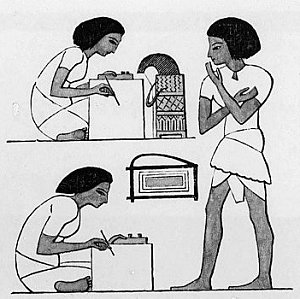
egyptianscribes1It is no secret that I tend to be a bit of a control freak. I do work well with others. I am just a little more reticent about working for them. I’ve been in the corporate sphere and could name-drop if I wanted to. I have also done my share of work with small businesses as well. It has been a mixture of good and bad. I have had wonderful bosses, and worked for executives who were the most unreasonable demons from the deepest pits of Hell. I have had great, co-workers and teammates that instill what that whole sort of culture should be about – and I have had the displeasure of having to work with the clueless and the incurably lazy who were more than happy to let me (or anyone else) do their jobs while they got paid just the same. In spite of all of this, I feel that each experience taught me a great deal.

I feel particularly blessed that right now, I am relying on a job outside of my own employment less and less. It was a hard road and a long time in coming. I believe my ability to do it now, rather than having been able to do it before is because of my having gone back to school. I learned some very good practical skills in media-related areas to be sure. However, more than that, I learned a great deal more and was exposed to some extraordinary teachers who are nothing less than a goldmine of knowledge, experience, and for some, the establishment of what I feel are real and lasting friendships. Through them I learned about good habits and not-so-great ones as well. This is especially true with my writing.

Between the blogs that I write and edit for commercial clients, the freelance camera work and the writing that I do via eBook publishing, it is looking like self sufficiency is not such a far off dream.

So, on my birthday I had to go to work at the job outside of the home. I don’t mind that so much. Today, however, the day after, I am spending time unfucking my habitat and unfucking the Sekhmet book. I think the former is going to be a little bit easier than the latter simply because right now, the book is a nearly 300 page long info-dump of everything I have compiled about Sekhmet and everything surrounding her for the last decade and a half. I confess, part of it makes me rather afraid, because I am putting myself out there to be shredded in the very same way that I shredded the late Dr. Robert Masters over my personal points of contention over his work. I am in his debt, of course, but he and I did not always see eye to eye and there are those who may find my work a complete departure. That sort of fills me with a bit of trepidation. Sekhmet, on the other hand, just keeps pushing that it needs to be put out there. So does my spouse and my son.

I just have to remember that the task in front of me is never as great as the Power (sekhem)_within myself. If I keep telling myself this, maybe I will actually not only start to believe it but live it, too.

Leave a comment

Filed under magickal alchemy, mystic woo-woo, product, review, sekhmet, Uncategorized, writing

Fiction: “The Summons” (From World Under Siege)

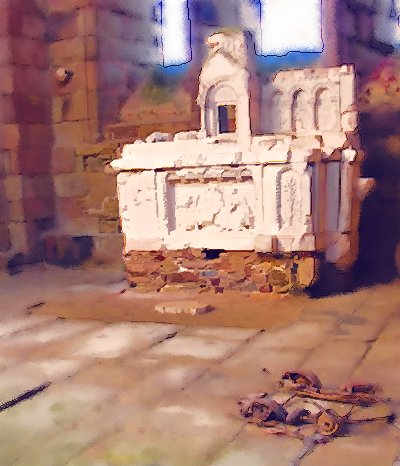
The ruins of the churc at Orandeur-sur-Glane

The ruins of the churc at Orandeur-sur-Glane

Rage, was all that she felt now.

That the Nazis had had the temerity to have burned the church at Orandeur-sur-Glane was unthinkable. Francoise de Rochefort’s heart nearly stopped in her chest as she saw her friend, Colonel Robert Grayson carrying the limp form of Amarante from his car to entrance of the chateau. The girl’s face, body and limbs were smudged with, blood, soot and ash. Her hair was matted with blood, her clothing in tatters, shoes were also now missing.

No, it couldn’t be like this! Not like this!’ the Comtesse wanted to scream, ‘Not her!’

The other servants had come into the hall, either they dropped what they were doing and stared or rushed forward toward the two figures in panic. Some, particularly the cook and some of the other matrons were wringing their hands, asking if there was something that they could do. Grayson ignored everyone’s expressions and queries except those of the lady of the chateau. His black, boots rapped sharply on the marble, followed by Francoise’s own footfalls. Up. up the stairs he carried Amarante to the Comtess’s own rooms. The Colonel had not needed to ask his Anam Cara where she wanted her protege’ to be placed. He knew.

When he had laid Amarante on the bed, he stepped back to get out of Francoise’ way. Pale and obviously shocked at the sight, immediately she began to evaluate the girl, tearing fabric away as she ordered one of the maids to draw a hot bath immediately.

“Who is responsible for this?” the Comtesse growled, “When I find them I shall kill them myself!” she shot a withering glance backward at her friend who gazed back at her evenly.

“There is no need, Francoise,” he said, not bothering to avert his eyes as Francoise continued to examine Amarante’s prone form, “They’re already dead.”

Francoise stopped, surprised. There was no need for Colonel Robert Grayson to confess any involvement. She knew he would have killed his own men for something like this. What was France coming to now, the Comtesse wondered. “I am sure that the SS will be quite interested to know why you shot men from your own ranks, Dieter Hag. Collaboration does not mean collusion with the French people.” Eyes stinging, Francoise turned back to Amarante. She was determined that she would not cry.

The bullet had gone through Amarante’s body cleanly, The entrance and exit had miraculously missed vital organs, and hopefully with diligence, Francoise thought, she would be able to stave off infection or any complications. Much of that would depend on what Colonel Grayson was able to do in keeping further SS involvement in the area.

After determining the depth of the wound, the Comtesse banished Grayson from the room. If the child were to awaken, however unlikely from the shock, she would be traumatised by the Colonel being in the same room while she was not dressed. There had always been an air of fascination tinged with fear that Amarante had in regard to Grayson. He had never been anything but kind to her, but it was the uniform of the Germans that she could never see past. That, Francoise thought, was not too different from the rest of the French who now lived under occupation. Now with the unspeakable horror of Orandeur-sur-Glane, that distrust and even loathing would surely deepen.

The child had been bathed, her wounds tended with the finest herbs and unguents that Francoise found in the Chateau de Rochefort’s apothecaries. Both had been ritually prepared, the myrrh and goldenseal from the Americas with Yarrow and lavender in beeswax and the finest olive oils. The bandages smelled sweet, relaxing and almost camphorous. Amarante, her honey-coloured hair now washed and barely damp but lovingly combed as the child slept in a clean white nightdress. Even in the low lamplight, the child’s rest was fitful, and far from restful. Nightmares would rise up, and Amarante would murmur softly as if speaking to someone in the room. One in particular, caught Francoise’s attention.

Non, non, Monsieur. The lady, she knew nothing! Qui? Non..non..

The Comtesse regarded what she had written and once again lit the brazier within her magical chamber, deep within the crypt beneath the Chateau de Rochefort. Unbinding her hair she let it fall and invoked the words that would awaken her husband’s shade. He haunted these halls and even without the rite itself, he would not refuse her summons and come to her call. But for this, this time, she could leave nothing to chance. This rite was to protect not only she and Amarante, but also Sebastien. The Giovanni and the Rochefort had been allied as families since the Renaissance, and there were others, very powerful others, who wished ill to either side, or even to both. The Halfling Countess could not afford to be careless.

A spectral wisp snaked through the caverns and stone arches beneath the Chateau, past the wine caves that its human form had so carefully tended when he was alive. Slowly it weaved its way, beyond the stone sarcophagi of endless ancestors that stretched back even before Merovingian times to the room where the wife of its last incarnation stood. Slowly, swirling around her as if once again alive, seductively moving about the Comtesse de Rochefort as her husband might have done.

In two breathfalls, she caught the scent not only of the musky dark of a mouldering grave, but that sweetness of leather and finest oils from the East that had been his favourite. The Comtesse closed her eyes and smiled, letting out a long exhale that sounded almost like a purr.

“You need not have been so formal, lady wife,” the spectral voice spoke to her mind, “I would have come…”

The Comtesse nodded, savouring the feeling like a brush of air against her neck that trailed over her breast. The sensation fell far short of what they had known in life. In the dimly lit chamber she could see the shadow move to formation. She allowed herself a small smile that bordered on adoration. Remembering why she had been moved to the crypts on a second consecutive night, her lips turned downward. “I know, mon amour,” she whispered in archaic French that few living understood and even fewer ever spoke. “I need you to leave the chateau’s halls and go to Venice.”

“Why would I leave?” the voice chuckled and caressed.

She ignored his question. ” You must. And after this, the Giovannisi will be expecting you.”

The shadow that had been once man was silent for a long moment. Francoise set the letter she had penned in sorceror’s ink on the parchment alight and continued. “I light this smoke to mingle with thine own essence….” Her voice trailed off and immediately the smoke and the shade became infused as one upon the air. She could feel th spectral mood shift as the flames licked and consumed the parchment from adoration to one of anger. His ville had been trespassed upon and worse, those who would have been under his charge had he been alive had been attacked. The very temerity of the act sent up billows of heat that caused the Comtesse to step back from the last shred that was being swallowed up by flame, consuming her very words:

Wordlessly she touched the parchment to the flame. It sputtered and quickly across the newly-penned missive. Each word remained for a moment in a glow, then became as nothing but feathery, glowing curls of etched carefully tanned hide that cooled and almost immediately disintegrated into dust. With a zephyrous gust, the last ashes of the letter were put out and Faelyn heard her husband’s words hiss inside of her brain.

“You send me into a necromancer’s trap with the child as bait, Faelyn?”

“You know better,” she snarled back, “I am out of my league in this and I do not want to relive the hell that we did with Marie.”

Another long silence then a large gust swept through the crypts. There were no other words of adoration, no sense of anything but the same sort of focused resolve that the man who once made up the shade had within himself. It sucked the air out of the chamber and out of Faelyn’s lungs until it blew back through the crypts and into the night air with a thunderous rumble and the slam of doors rattling on their hinges. It was as if Sebastien had mounted upon his black stallion and spurred him through the very halls of the Chateau de Rochefort, sword drawn.

Faelyn crumpled to the floor gasping, swallowing in an attempt to regain her composure, but the crushing heat of anger from her husband’s shade remained.

Her message had been sent.

Special thanks to my fellow writers who pen and who have permitted me to use the characters of Col. Robert Grayson, and Ambrogino and Isabel Giovanni. A most heartfelt thanks must go to the hand behind M. le Comte de Rochefort. It is because of them and their muse that my obsession with their story has never waned.. The rest of the story can be read at

Leave a comment

Filed under fiction, panhistoria, World Under Siege

D is for Djed

Djed Pillar

Djed Pillar as found in the Tomb of Nefertari, Valley of the Queens

The Djed Pillar or Djed Column is representative of the idea of stability. The Djed pillar comes from as early as Pre-Dynastic times. Some Egyptologists believe it was a pillar that grain was once tied to and this symbol was associated with Ptah and Sokar and then later with Wasir (Osiris). Ptah of the Triad of Mennefer (Memphis) was often referred to as “The Great Djed”. It is because of the association with Sokar and the mummiform figure of Ptah, that the Djed is associated with Wasir. Some illustrations that have been found on papyri and tomb walls show the Djed with arms and a crook and flail – indicated Wasir’s resurrected state in the Duat (Underworld).
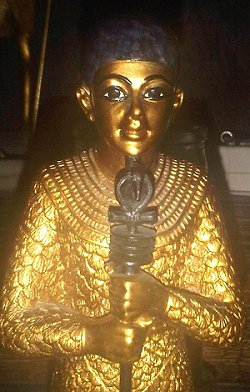
Ptah

Ptah

The ceremony of the ‘Raising the Djed Pillar took place in the city of Menefer or Memphis. The King, aided by the priests, would raise the pillar with ropes. A Djed lying on the ground is indicative of death, and the raising of the Djed is symbolic for raising up or bringing new life. Because the Pharaoh was the ruler of the living and Wasir was the king of the dead, the act of raising the Djed was believed to emphasize both the stability of the King and with him, the land, but also tied the king and the land with the rebirth of life in both the world of form and the Duat. Raising the Djed pillar was also done during the Heb-Sed festival which was performed by the Pharaoh to reaffirm his strength and endurance at year 30 and then every three years again after this. It was considered a joyous occassion.

It was a common practice to paint an image of the Djed pillar in the back interior panel of coffin for the obvious reference of the symbol representing the backbone and would be in the precise place where the actual backbone of the deceased would rest. The stabilizing and regenerative meaning of this is obvious. Djed amulets were also commonly included in the wrappings of mummies to insure the renewed life of the deceased in the Duat. On these amulets were sometimes inscriptions of prayers or heka. A portion of the Prt Em Hru or Book of the Dead were engraved on one of two Djed amulets that were found on the mummy of Tutankhamen. The word words to be recited to the god Wasir (Osiris) were:

“Thou hast thy backbone, O weary one of heart; thou shalt place thyself upon thy side so that I may give thee water beneath thee. I have brought thee a djed pillar of gold; mayest thou be pleased with it.”

Nefertari offering to Ptah

Nefertari offering to Ptah

In the tomb of Queen Nefertari in the Valley of the Queens in Egypt, Nefertari is shown offering to Ptah who is standing in a kind of kiosk. Directly in back of him is the Djed pillar and even the staff that the god holds is in the form of the Djed. One of the inscriptions include the Djed, the Ankh and the Was and says:

“All protection, life, stability, dominion and health are behind him.”

In Kemetic belief, the four capitals at the top of the Djed pillar signify stability. Everything, for us, is almost always done in fours – the four corners of a building, the four times that we declare purity, “It is pure, It is pure, it is pure, it is pure,” or the four times we encircle a room with natron and water, light and incense and sound – all lend itself to establishing a foundation of purity, and again, tie back to the Djed and its manifold symbolism. Stability allows firmness of purpose, to know where we stand, or that what has been established can be carried on and continued on that firm foundation of stability.

Resources

Naydler, Jeremy. Temple of the Cosmos: The Ancient Egyptian Experience of the Sacred. Rochester, VT: Inner Traditions, 1996. Print.

Naydler, Jeremy. Shamanic Wisdom in the Pyramid Texts: The Mystical Tradition of Ancient Egypt. Rochester, VT: Inner Traditions, 2005. Print.

Shaw, Ian, and Paul T. Nicholson. The Dictionary of Ancient Egypt. New York: Harry N. Abrams, 1995. Print.

Wilkinson, Richard H. Reading Egyptian Art: A Hieroglyphic Guide to Ancient Egyptian Painting and Sculpture., p.176 – 177; London: Thames and Hudson, 1992

PBP2014d

1 Comment

Filed under kemetic, pagan, Pagan Blog Project 2014

Women and Magic… a full moon in Leo post! (Reblogged)

Circe1891Of all the occult authors and teachers out there that I have read over the years, I consider Josephine McCarthy (Littlejohn) to be one of the best, no-nonsense, no bullshit people that are out there. I also consider her to be a Sekhmet sister, a seba (teacher) and a much-valued friend.

Josephine’s latest post, referenced below, is one of the best that I have read in a very long time. It is a must read for every woman who considers herself an occultist of any stripe – whether she consider herself to be a witch, a magician, a Priestess, a sorceress, a diviner or anything else. Men would also do very well to listen up to what she has to say. All too often in our communities, no matter how we think we have gotten past all that, there is a tendency to couch the sexism, racism, classism and various other ‘isms’ that have the vile tendency to rear their ugly heads in denial if not outright excuses of one kind or another. Josephine has a firm grip on the Zep Tepi Bat (aka Cosmic Clue By Four) and she hits this subject squarely between the eyes without flinching. Hers is the voice of experience and it has long needed to be said.

~*~*~*~*~*~

Something that has bothered me for a long time is something that has come up frequently in magical discussion and that is the issue of women and magic, or to be more precise, sexism in the magical community. Rather than launch into the usual ‘all men a bad and all women are victims’, which is not true by any means, there are some things that as an older woman in my fifties I can pass on to young women stepping out into magic.

Like any aspect of modern life, magical communities are very much defined by the cultures they spring from, regardless of how hard a magical group tries to avoid that. What we can do as magicians is be aware of those cultural traps, particularly the subtle ones that tend to get missed, and avoid them as much as possible? In truth, behind the apparent smokescreen of sexism, is the real issue which is one of power: people seeking power or lacking in power, regardless of gender, are the most likely to exhibit sexism whether it is intentional or subconscious. (READ THE REST OF JOSEPHINE’S POST HERE)

7 Comments

Filed under mystic woo-woo, pagan, politics, rants, reblogged

Sekhmet Ritual

shrine1a1Yesterday (February 4th), marked the day that Sekhmet calls to Her shemsu (Followers). Last night I celebrated a rite to Sekhmet with heka, meditation and prayer. Offered before Sekhmet’s naos was ight, incense and pomagranate liqueur. It was a time of re-dedication and reflection on numerous goals and areas of personal focus. I was able to write some heka for the day which I will share here. This is only one part of the Rite. The other parts are either Oathbound or are not going to be published until the Sekhmet book is released.

Nothing and no one shall disrupt my peace.
Nothing and no one shall disturb my peace.
Nothing and no one shall destroy my peace.

I am the daughter of Sekhmet-Mut, daughter to the Queen and also to the King!
My birthright is that of the lofty and high.
My heka is strong; I shall not succumb to your machinations
My heka is strong; I shall not be turned aside nor turned back
You cannot interfere with my progress
I have already been established within the Eye of both my Mother and my Father
All the Netjeru know my name!
The Akhu have heard and shall always render their aid
My heka is the heka of my Mother
She who is the flame of all Power!
Copyright Ma’at Publishing

I do believe that this date, not accidentally, falls just one day before the Uncreated One, [Apep] is brought into existence on February 5th, according to an Ancient Egyptian Festival Calendar that I assembled years ago. I rather buried it even before I switched ISP’s and now it rests on the website that I am co-owner of, PanHistoria.com. In reflection, it occurs to me that we, the shemsu of Nejter, are called to right to uphold Ma’at and to do what is right around us and what is within our power to do, even if that ‘right’ is merely getting our lives straightened out and all things working and in order. While that sounds like something that should be second nature for all of us, somehow in the process of living we put off, we shirk, or we pretend not to see what we know in our hearts must be done in order to preserve ma’at.

At any rate, I have a number of dates for various Sekhmet and HetHert (Hathor) festivals that I am working with. It is my goal to continue these throughout the rest of the Kemetic year. I am not necessarily doing the same dates that my Sekhmet sister, Aubs is doing or exclusively from a list that Candace Kant has published from a number of sources that was recently posted on one of the Sekhmet groups on Facebook. To this list, which mirrors the one I already have, I have a few more of from my own research. Unlike Aubs, I am not currently focusing on healing rituals for others at the moment. The only exception would be for emergency situations, of course. My reasons for not offering to do the same types of ritual work for others is this: I have done the stint as an herbalist and healer for Sekhmet, often to my own detriment. I now have to be wise enough and experienced enough to know when it is time to take a step back and heal my own self and my life. No, that isn’t foreshadowing any sense of ‘DOOM’; however, it is nonetheless necessary.

So both yesterday and today have been days of much reflection and planning and serious focus on both my online client work, school planning for next semester and the various publishing and filming projects. I admit, my shrines have been pretty much open the entire time with candles burning nearly on a constant basis. In the wake of the latest bits of cleansing and clearing, it feels as if a great weight has been lifted and much of the extraneous “junk” has been cleared away. It’s good to have that sense of being more organized and a sense of purpose. For too long I’ve been working on the agenda of others, and now it’s time to focus on my own. That alone has made the time spent very well worth it.

lotusplaceholder

6 Comments

Filed under Uncategorized

C is for Celestial Cow

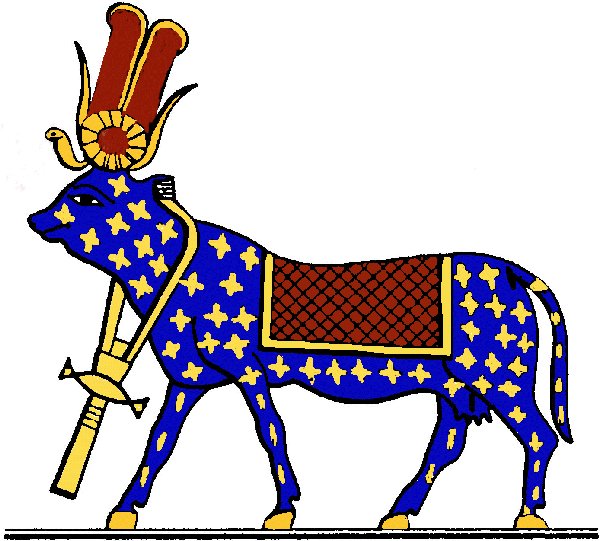
moocowOne of the most enduring symbols of Deity in the Ancient Egyptian cosmogony is that of a Bovine Goddess. From the earliest dynastic period and the Narmer Palette with the figure of the goddess Bat, believed to be a precursor to the popular HetHert – more commonly known as Hathor, the imagery of a celestial or divine cow has endured. Though Aset (Isis) and Hathor both are commonly shown with horns and a solar disk as part of their symbolism, only Hathor has bovine ears.

The Book of the Heavenly Cow, though some believe it originated during the Amarna period under Amunhotep IV (Akhenaten) more likely actually originated around the time of Amunhotep II, Akhenaten’s paternal great grandfather. This is most likely because of an illustration on the walls of his tomb which depicts the pharaoh suckling from the Great Divine Cow. the story is also depicted on the golden shrines that were found within the tomb of King Tutankhamun. Cows appearing in both the sky and in the Duat (Underworld) linked Hathor and Nut as being the one who bore the sun god, Ra, upon Her back. The story of the Celestial Cow appearing in the tomb has less to do with the magical transformation or protection of the King as the tale is probably meant a Creation tale. The Book of the Divine Cow or Celestial Cow ties directly to the mythos surrounding Sekhmet and the Destruction of Mankind.

I have talked a little about this in other blog posts. This story has direct correlations also, with the Flood of Noah in the Christian bible where Mankind, in its rebelliousness has turned their faces from Divine authority. In the Egyptian version, Mankind not only turned away, but in some versions, plotted to overthrow and kill the Netjeru (Gods). Ra asked the others what to do, and they asked Ra, Who was their King, to send His ‘Eye’. The Eye, in this tale, is HetHert (Hathor) and in Her rage, She transforms from Her more benign form of a beautiful woman with bovine ears into the lioness, Sekhmet.

Before all of this had transpired, there had been a golden age upon the earth where Mankind and the Netjeru had lived side by side under the rulership of Ra. In that golden age, there was no death, there was no real delineation between day and night where Ra traversed across the sky and then into the Underworld at night. He was always visible at all times. All of this was before the accidental creation of the Uncreated One [Apep ] or any knowledge or concept of isfet.

When Ra sought the counsel of the other deities, He asked them to tell him what to do, that he did not want to wipe humanity out, but rather to punish them. He asked Nu, who said, “Send forth Thine Eye (HetHert) to strike those who blaspheme you, for none may resist the Eye when it shines in the form of HetHert.”

When HetHert was summoned, She became very angry at those who would raise their hand against Ra, Her father. She transformed into Sekhmet and for a period of three days and three nights, she indiscriminately slew every human that she came upon; men, women and even children where She found them. Her slaughter began at Hensu (Herakleopolis Magna) and continued throughout the land. Ra was alarmed at the bloodshed and He implored Sekhmet / HetHert to stop her killing. She looked upon Her Father and flatly refused. By this time, the anger that She was feasting on had become a heady draught of its own. “As sure as You live for Me (By all that is holy),” She said, “so it is pleasing (a balm upon My heart) to have triumphed over them (Mankind).”

Ra was concerned that Sekhmet would slay all of humanity until there were none left. He needed a plan to stop Sekhmet / HetHert from destroying humans entirely. It was Djehuty (Thoth) who came up with the idea of taking red beer, spiking it with mandrake and colouring it with red ochre or hematite in order that it should resemble blood. He did this with the assistance of slave girls or priestesses of the Goddess. Vats and vats of this soporific liquid was poured out onto the land until it resembled a vast lake of blood placed directly in the path of the raging Goddess. Sekhmet came upon this lake of red beer and began to drink. She drank and drank until She became happy and forgot about why She was angry in the first place and was at last quelled, turning once again back into the beautiful (if not happily drunken) Hethert. From time immemorial during the feast that commemorated the pacifying of Sekhmet / Hathor, making the beer was entrusted to the priestesses or slave girls to make the intoxicating drink that was consumed.

Celestial Cow Inscription Ra and the rest of the Gods were overjoyed that Sekhmet’s carnage had at last stopped. Ra cried out in joy at seeing HetHert again, “Welcome, welcome in peace, O’ Beautiful One!”

But at this point, Ra withdraws from the Earth, from Mankind, not as a form of punishment but rather because He realized that unleashing His rage, in the form of Sekhmet, He introduced to the world, the reality of death and destruction for the very first time. The Golden Age that knew Mankind and Gods to live as One in the same place upon the Earth is now over. Ra knows deep down that in order save humanity from the potential of His wrath, there needed to be distance between Hims and the creation (Humanity) that He loves.

The Eye of Ra, Who was a lioness, now being pacified has transformed back into a cow. This cow is called mehet-weret ‘Great Flood’ or “Great of Flood”, which is also equated with Nut, the starry sky at night as well as with HetHert. The ‘Great Flood’ was made of beer, rather than of water. The “flood” within Egyptian mythology ends up being Mankind’s salvation when it came, rather than that which was sent to cleanse the earth of humanity. Mehet Weret / Nut allows Her Father, Ra, to ride upon Her back into the sky and the Two begin to ascend.

In the myths that make up the Book of the Divine Cow, several times She (HetHert / Nut) becomes fearful of the heights to which She and Her Father, Ra, have risen. Her Father urges Her to continue to climb, encouraging Her along the way as They keep rising up higher and higher into the sky. At one point, She becomes so frightened that She cannot stand on Her own. Ra summons the sons of Shu, who are referred to as “the pillars that hold up the sky” and the four winds so that They can steady Nut by holding onto Her legs so that She will, shoring Her up so that She will not fall.

At last Ra and Nut and Their entire accompaniment reach Their lofty destination. The Cow, for Herself, becomes quite lonely for all that She and Ra have left behind Them. Ra reassures her by reminding Her that all over Her body are the stars that make up the nighttime sky. Her starry raiment serves as a sentimental glimpse and a memory of all of those good people and things that are now removed from the world by death that may seem now to be gone. They are, in fact, not gone at all, but are always there. Today, like many cultures, Kemetics look up at the starry night sky and see the millions upon millions of akhu or ancestors who are there. Like Ra, they are removed from us but not truly gone. There is a comfort to know that our akhu are never far away and they are between us and the Divine. They keep the Gods company and the serve as a go between to intercede on our behalf and vice versa.

I love the way that Rev. Tamara Siuda explained it that, “In creating the Celestial Cow, Ra has both made sure that She will never be lonely – and righted the wrong of killing people in the first place, by making sure that they can have another life after the lives they lost, and another chance at redemption.”

The takeaway from the lesson of the Celestial Cow is that no matter how bad things may seem, no matter how far from redemption things may appear, we are never alone. Even though it may feel as if we are facing a crisis or the world at large completely with no one to hear or to help, we have many things around us in terms of people, nature, the celestial sky and even our memories to keep us company. They are there to bolster us and back us up whenever the needs arise. The blinking stars in the sky at night are that reassurance that someone, in fact several someones are up there and are indeed listening.

Resources

Piankoff, Alexandre, and N. Rambova. The Shrines of Tut-ankh-amon. New York: Harper & Row, 1962. Print.

Roberts, Alison. Hathor Rising: The Power of the Goddess in Ancient Egypt. Rochester, VT: Inner Traditions International, 1997

Roberts, Alison. Golden Shrine, Goddess Queen: Egypt’s Anointing Mysteries. Rottingdean, East Sussex: NorthGate, 2008.

Roberts, Alison. My Heart My Mother: Death and Rebirth in Ancient Egypt. Rottingdean, East Sussex: NorthGate, 2000.

Shaw, Ian, and Paul T. Nicholson.The Dictionary of Ancient Egypt. New York: Harry N. Abrams, 1995.

Siuda, Tamara L. The Neteru of Kemet: An Introduction. New York: : Eschaton Productions, 1997.

Siuda, Tamara L. The Ancient Egyptian Prayer Book. Chicago, IL: Star Gazer Design, 2009.

Siuda, Tamara L. “Kemet Today: And There Were Stars: How a time out turned into a nighttime sky”

PBP2014d

3 Comments

Filed under kemetic, pagan, Pagan Blog Project 2014, sekhmet

ENOUGH!

Africa191There is no shortage of people in the world, and especially online who want to worship or honour the Kemetic (Egyptian) gods or Netjeru. You would think after 20+ years of Kemetics being online they would have tried to build alliances and make bridges without the petty infighting and holier than thou bullshit that gets handed around like last year’s Christmas fruitcake.

Let me state at the outset before I say anything else, that I have no grand vision of being “in charge of” anything. I am not here to take anyone to task or to fight with anyone else. This is not some half-arsed attempt on my part in order to get students or for me to become a guru of some sort. I am flat-out not interested in such things at all. Been there, done that, and I donated the T-shirt because it wasn’t “me” anymore. I’m just like everyone else in that I am committed to the culture, the history and the religous ideals of Ancient Kemet. I am not an accredited Egyptologist. I fully acknowledge that I am here by the grace of Sekhmet and the generosity of many, many talented sebau (teachers) and to them I am eternally grateful and I refuse to dish or diss on any one of them.

Lately I have noticed increasing factionalisastion going on within the Kemetic landscape. In the years that I have been blissfully far removed from the jealous infighting, the petty backbiting, hubris and ‘witch wars’ that seem to be part and parcel of the so-called Pagan “community”, I have watched those traits migrate here. After 20+ years, I am exhausted.

So, that being said, I am going to do everything in my power to establish a list of various Temples, Shrines, blogs, organizations, information resources, etc. because it is absolutely needed. If anyone thinks I am doing this for any specific organization, guess again. I’m not. Sekhmet has given me marching orders 1) finish the book and 2) establish the network because honestly, the Pagan Community and the Kemetic Community in specifics deserve at least a modicum of respect, in spite of the differences between us and it’s time that this happened. It is long past time, to be honest. This should have been done some 20 years ago, but for whatever petty, ego-driven, any other set of reasons, it did not transpire. It’s going to happen NOW.

We are bigger than this. We should not (still) have to be listening to the petty, catty, bitchy, in-fighting that goes on for no good reason. There are no good reasons why we cannot do this. If I have to kick ass, or become some sort of pariah, ostracized or called out for being a Kumayah, Pollyanna Kemetic, so fucking be it! We are long past done playing at this. It’s time to do it.

Still have doubts? Let me spell it out:

It’s about, GOD, or the Gods (plural) and our relationship to them, people!! Get OVER it! We all have something to contribute and we NEED to be doing that in the interests of Ma’at. I am not interested in hearing the arguments against such a thing moving forward. I will not give credence to he said / she said, petty grudges from years ago that happened on Usenet, Ancient Worlds, or Tumblr. There are no more excuses, so don’t bother bringing them up to me. It’s time for all of us to ask ourselves, each and every one: “WHY the fuck are you here?!” We collectively need to take what I call the Janet Jackson Approach and ask ourselves, ‘What have YOU actually DONE for the God(s) lately?! What have you done for yourself lately?!” After answering those questions honestly, the next question to ask must be, “What’s stopping you? Who do you think is preventing you from doing it?” If we fall into the temptation to start to point fingers at anyone else than the man or woman that is in the mirror, then I encourage each of us to remember that with that pointing of fingers, there are still three other fingers and a thumb pointing right back at us.

I will write this up in more detail in a bit, however, if anyone imagines that I am doing this to step on toes or encroach on their “territory”, they need to take a step back. This is solely about trying to take a cursory census of who thinks the idea of a collective of those who are bound by the things that we believe and hold dear is more important than the ongoing factionalization that we have been suffering from for over 20 years.

Playtime is over. It’s time to STFU and get to work. If you want it, well then each of us needs to determine just how much and what we are willing to do in order to achieve it.

Excuses are boring. Let’s get to it.

2 Comments

Filed under kemetic, mystic woo-woo, pagan, politics, private, rants, sekhmet, update, writing